

€ 87,67 € 3,14 verzendkosten Totaal € 90,81

Uitgelicht
|
|
87,67 |
Naar shop
|

|
99,99 |
Naar shop
|
| VERGELIJK ALLE AANBIEDERS (2) | ||
 Beschrijving
Vergelijk aanbieders (2)
€ 87,67 € 3,14 verzendkosten Totaal € 90,81
€ 99,99 Gratis verzending
Winkels met andere maten
Beschrijving
(1)
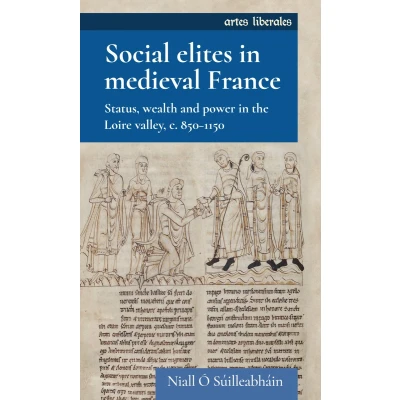
Social élites in medieval France is an account of the profound transformations which occurred in medieval society following the disintegration of the Carolingian Empire. Based on a case study of the Loire valley, this book traces the social and economic origins of the localised élite lordships which came to dominate medieval society. Following the disintegration of the Carolingian Empire, French society embarked on a profound transformation fuelled by economic expansion and intense competition for status among social elites. This book explores medieval society during this crucial period through an in-depth examination of the middle Loire valley region. Re-focusing on the economic history of medieval France, Social elites in medieval France demonstrates the dramatic expansion in the resources available to local elites and analyses how this wealth was deployed to acquire and display social status. Central to the book’s argument is the recognition that social status was not fixed, but rather contextual and in constant need of performance. Both churchmen and lay elites sought to perform their status through the imposition of seigneurial customs, the cultivation of patronage networks affirmed through ecclesiastical rituals, and, above all, the accumulation of material wealth. Lay elites also asserted their status in increasingly militaristic ways, through the use of violence to resolve disputes, the building of castles and the adoption of the title of ‘knight’. Bringing together a range of documentary, narrative and archaeological evidence, this book identifies the key motors and drivers of social change in medieval France: local elites, both lay and ecclesiastic, and their increased access to material wealth. Social elites in medieval France presents a compelling and important argument on the origins of the localised ‘feudal’ systems of elite dominance that characterised French and European society until the end of the Middle Ages. This book makes an important and compelling intervention in long-standing debates about social changes, the power of the aristocracy and the “Feudal Revolution” in the European central middles ages. At its core, the book asks how the élites of Europe – the ecclesiastical hierarchy as well as the lay aristocrats – ‘got away with’ the extreme accumulations of wealth and power which characterised medieval society. The research adopts an innovative methodology, seeing social status not as a static position within society, but as processual, contested and in constant need of affirmation. Drawing on a case study from the Loire valley region in central France, the work argues that élite domination was neither natural nor static but was radically transformed as part of a broader re-shaping of the French economy and society in the centuries surrounding the year AD 1000.
 Prijshistorie
 * Prijshistorie bevat geen data van Amazon.
Prijzen voor het laatst bijgewerkt op:
 Gerelateerde resultaten
 Productspecificaties


