








Social World Of Pupil Assessment
Uitgelicht

|
105,74 |
Naar shop
|

|
132,00 |
Naar shop
|
 Beschrijving
Bol
The findings in this study have major implications for education practice and policy. It shows how supposedly objective assessment procedures depend on their contexts and are vulnerable to both bias and distortion. The study provides the definitive examination of assessment in the 5-11 ranges. Defining assessment in the widest possible way, this work is a comprehensive ethnographic study of assessment. The case studies cover most of the important questions concerning assessment: who is being assessed and who is doing the assessing?; what is being assessed and when and where is the assessment taking place?; how does assessment function and how are assessment findings interpreted? The findings have major implications for education practice and policy. It shows how supposedly objective assessment procedures depend on their contexts and are vulnerable to both bias and distortion. The study provides the definitive examination of assessment in the 5-11 ranges.


 Beschrijving
(2)
Beschrijving
(2)
The findings in this study have major implications for education practice and policy. It shows how supposedly objective assessment procedures depend on their contexts and are vulnerable to both bias and distortion. The study provides the definitive examination of assessment in the 5-11 ranges. Defining assessment in the widest possible way, this work is a comprehensive ethnographic study of assessment. The case studies cover most of the important questions concerning assessment: who is being assessed and who is doing the assessing?; what is being assessed and when and where is the assessment taking place?; how does assessment function and how are assessment findings interpreted? The findings have major implications for education practice and policy. It shows how supposedly objective assessment procedures depend on their contexts and are vulnerable to both bias and distortion. The study provides the definitive examination of assessment in the 5-11 ranges.
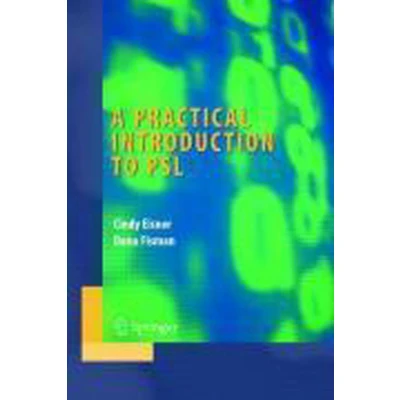
Bol PartnerThis book describes the Property Specification Language PSL, recently standardized as IEEE Standard 1850-2005. PSL was developed to fulfill the following requirements: easy to learn, write, and read; concise syntax; rigorously well-defined formal semantics; expressive power, permitting the specification for a large class of real world design properties; known efficient underlying algorithms in simulation, as well as formal verification. Basic features are covered, as well as advanced topics such as the use of PSL in multiply-clocked designs. A full chapter is devoted to common errors, gathered through the authors' many years of experience in using and teaching the language.
 Productspecificaties
| EAN |
|
|---|---|
| Maat |
|
 Prijshistorie
Prijzen voor het laatst bijgewerkt op:
 Gerelateerde resultaten


