


€ 29,99 Gratis verzending

Uitgelicht
|
|
29,99 |
Naar shop
|

|
32,59 |
Naar shop
|

|
32,59 |
Naar shop
|
| VERGELIJK ALLE AANBIEDERS (3) | ||
 Beschrijving
Vergelijk aanbieders (3)
€ 29,99 Gratis verzending
€ 32,59 Gratis verzending
€ 32,59 Gratis verzending
Winkels met andere maten
Beschrijving
(1)
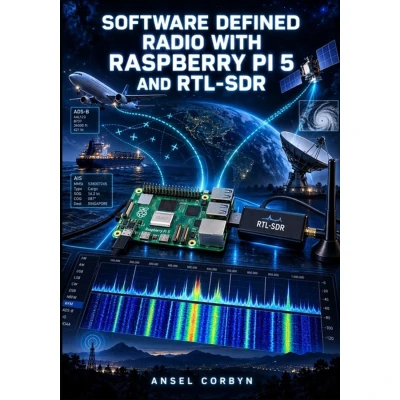
Turn a Raspberry Pi 5 and an RTL-SDR receiver into a practical radio monitoring station for aircraft, vessels, weather satellites, aviation data links, and the RF spectrum.Software defined radio becomes far more useful when you understand how antennas, RF hardware, Linux, signal processing, decoders, and receiver software work together. This guide takes you from a stable Raspberry Pi SDR workstation to real receiving projects you can build, test, troubleshoot, and operate continuously.You will learn how to move beyond basic tuning and create dependable receiving systems for aviation, marine, satellite, and spectrum monitoring while understanding the RF principles behind every configuration.- Set up Raspberry Pi 5 for reliable SDR work with proper power, cooling, USB, storage, networking, SSH, and headless administration- Understand I Q samples, tuner architecture, gain, dynamic range, PPM correction, filtering, LNAs, bias tees, coax loss, and receiver overload- Select and position antennas for aviation, ADS B, AIS, VHF data links, and L band satellite reception- Use SDR software to inspect live signals, waterfalls, bandwidth, interference, noise, and receiver artifacts- Build AM, narrowband FM, and wideband FM receivers with GNU Radio while learning filtering, decimation, resampling, AGC, and frequency translation- Perform wideband spectrum sweeps, create long term waterfalls, and analyze relative band occupancy with rtl power tools- Track aircraft at 1090 MHz, decode Mode S and ADS B data, and build browser based aircraft monitoring with readsb and tar1090- Decode ACARS and VDL Mode 2 traffic, including higher layer aviation data using acarsdec, dumpvdl2, and libacars- Receive both AIS channels simultaneously, decode vessel identity and position data, and build marine monitoring services with AIS Catcher- Build a modern GOES HRIT and EMWIN weather satellite receiving station using a dish, LNA, filtering, RTL SDR, and SatDump- Manage multiple receivers with persistent serial numbers, dedicated antennas, systemd services, logging, storage policies, and automatic recovery- Troubleshoot dropped samples, thermal throttling, USB failures, gain problems, RF interference, frequency error, network issues, and weak receptionThe book includes practical command line examples, Python snippets, GNU Radio configurations, systemd service files, decoder commands, and diagnostic procedures that help you turn the concepts into working receiver projects.Grab your copy today and build a capable Raspberry Pi based SDR station that you can understand, expand, and maintain with confidence.
 Prijshistorie
 * Prijshistorie bevat geen data van Amazon, Amazon Marketplace.
Prijzen voor het laatst bijgewerkt op:
 Gerelateerde resultaten
 Productspecificaties


