
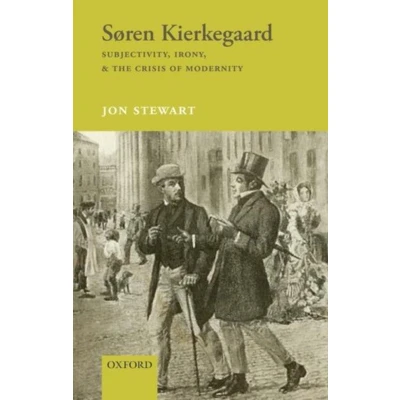
Soren Kierkegaard: Subjectivity, Irony, & the Crisis of Modernity
Uitgelicht

|
31,26 |
Naar shop
|

|
31,26 |
Naar shop
|

|
31,26 |
Naar shop
|
| VERGELIJK ALLE AANBIEDERS (3) | ||
 Beschrijving
Bol
The book takes as its starting point the statement made by Kierkegaard towards the end of his life in which he claimed the model for his work had always been Socrates, and traces this influence on Kierkegaard's development as philosopher and religious thinker with a particular focus on the early text The Concept of Irony. Søren Kierkegaard: Subjectivity, Irony, and the Crisis of Modernity examines the thought of Søren Kierkegaard, a unique figure, who has freeired, provoked, fascinated, and irritated people ever since he walked the streets of Copenhagen. At the end of his life, Kierkegaard said that the only model he had for his work was the Greek philosopher Socrates. This work takes this statement as its point of departure. Jon Stewart explores what Kierkegaard meant by this and to show how different aspects of his writing and argumentative strategy can be traced back to Socrates. The main focus is The Concept of Irony, which is a key text at the beginning of Kierkegaard's literary career. Although it was an early work, it nevertheless played a determining role in his later development and writings. Indeed, it can be said that it laid the groundwork for much of what would appear in his later famous books such as Either/Or and Fear and Trembling.


 Beschrijving
(2)
Beschrijving
(2)
The book takes as its starting point the statement made by Kierkegaard towards the end of his life in which he claimed the model for his work had always been Socrates, and traces this influence on Kierkegaard's development as philosopher and religious thinker with a particular focus on the early text The Concept of Irony. Søren Kierkegaard: Subjectivity, Irony, and the Crisis of Modernity examines the thought of Søren Kierkegaard, a unique figure, who has freeired, provoked, fascinated, and irritated people ever since he walked the streets of Copenhagen. At the end of his life, Kierkegaard said that the only model he had for his work was the Greek philosopher Socrates. This work takes this statement as its point of departure. Jon Stewart explores what Kierkegaard meant by this and to show how different aspects of his writing and argumentative strategy can be traced back to Socrates. The main focus is The Concept of Irony, which is a key text at the beginning of Kierkegaard's literary career. Although it was an early work, it nevertheless played a determining role in his later development and writings. Indeed, it can be said that it laid the groundwork for much of what would appear in his later famous books such as Either/Or and Fear and Trembling.
AmazonPagina's: 240, Editie: Reprint, Paperback, Oxford University Press
 Productspecificaties
 Prijshistorie
* Prijshistorie bevat geen data van Amazon, Amazon Marketplace.
Prijzen voor het laatst bijgewerkt op:
 Gerelateerde resultaten


