
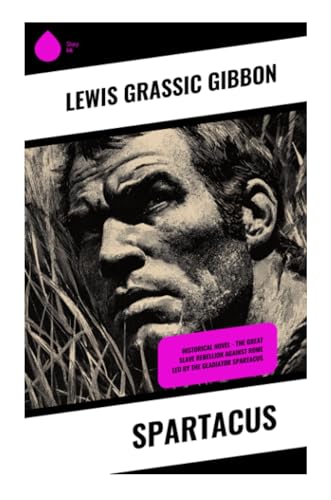
Spartacus: Historical Novel the Great Slave Rebellion against Rome led by Gladiator Spartacus
Uitgelicht

|
12,30 |
Naar shop
|

|
12,30 |
Naar shop
|

|
12,30 |
Naar shop
|
| VERGELIJK ALLE AANBIEDERS (3) | ||
 Beschrijving
Bol
Spartacus retells the great slave uprising of 73-71 BCE not as a pageant of antique heroism, but as a searching political tragedy about bondage, solidarity, and the limits of revolutionary hope. Gibbon's prose is vigorous, unsentimental, and rhythmically charged, combining historical reconstruction with a modern awareness of class struggle and imperial violence. Written in the interwar period, the novel belongs to a tradition of left-leaning historical fiction that uses the ancient world to interrogate contemporary crises of capitalism, militarism, and freedom. Lewis Grassic Gibbon, the pen name of James Leslie Mitchell, was a Scottish writer best known for A Scots Quair, but his imagination ranged far beyond rural Scotland. His journalism, military experience, travels, and socialist convictions sharpened his suspicion of empires and ruling classes. Spartacus reflects these concerns: Rome becomes not merely a historical setting but a symbolic machinery of exploitation against which human dignity briefly, magnificently rebels. This book is recommended for readers interested in historical fiction with intellectual force and moral urgency. It will especially appeal to those who value politically engaged literature, classical history reimagined with modern insight, and tragic narratives that ask what freedom costs.


 Beschrijving
(1)
Beschrijving
(1)
Spartacus retells the great slave uprising of 73-71 BCE not as a pageant of antique heroism, but as a searching political tragedy about bondage, solidarity, and the limits of revolutionary hope. Gibbon's prose is vigorous, unsentimental, and rhythmically charged, combining historical reconstruction with a modern awareness of class struggle and imperial violence. Written in the interwar period, the novel belongs to a tradition of left-leaning historical fiction that uses the ancient world to interrogate contemporary crises of capitalism, militarism, and freedom. Lewis Grassic Gibbon, the pen name of James Leslie Mitchell, was a Scottish writer best known for A Scots Quair, but his imagination ranged far beyond rural Scotland. His journalism, military experience, travels, and socialist convictions sharpened his suspicion of empires and ruling classes. Spartacus reflects these concerns: Rome becomes not merely a historical setting but a symbolic machinery of exploitation against which human dignity briefly, magnificently rebels. This book is recommended for readers interested in historical fiction with intellectual force and moral urgency. It will especially appeal to those who value politically engaged literature, classical history reimagined with modern insight, and tragic narratives that ask what freedom costs.
 Productspecificaties
 Prijshistorie
* Prijshistorie bevat geen data van Amazon, Amazon Marketplace.
Prijzen voor het laatst bijgewerkt op:
 Gerelateerde resultaten


