


€ 109,00 Gratis verzending

Uitgelicht
|
|
109,00 |
Naar shop
|
| VERGELIJK ALLE AANBIEDERS (1) | ||
 Beschrijving
Vergelijk aanbieders (1)
€ 109,00 Gratis verzending
Winkels met andere maten
Beschrijving
(1)
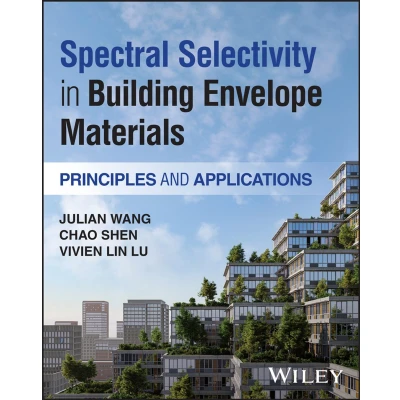
Advance building energy efficiency through spectrally selective envelope materials Materials that selectively absorb, reflect, or transmit solar radiation by wavelength offer significant potential for reducing building energy consumption. Spectral Selectivity in Building Envelope Materials: Principles and Applications provides a rigorous treatment of these materials, connecting fundamental building science and engineering principles with real-world implementation across diverse climate zones and building types. Detailed case studies demonstrate how spectrally selective paints, coatings, and glazing systems manage heat and light transfer across building envelopes, reducing cooling loads in summer and heating demands in winter. Dedicated sections address integration with renewable energy systems, including photovoltaic and radiative cooling applications. Future research directions identify emerging opportunities for next-generation material development. Readers will also find: Methods for characterizing transmittance, reflectance, and absorptance properties of envelope materials across relevant wavelength ranges in laboratory settings Strategies for specifying spectrally selective coatings and glazing in both new construction and retrofit building projects Analysis of thermal comfort improvements achievable through wavelength-dependent solar radiation management in residential and commercial buildings Discussion of environmental performance metrics linking material selection to measurable reductions in operational energy use and carbon footprint Guidance on evaluating material durability, cost-effectiveness, and lifecycle performance for long-term spectrally selective envelope applications Designed for civil engineers, construction practitioners, and building science researchers, this reference delivers the technical depth required to evaluate, specify, and implement spectrally selective materials. Advanced students in architectural engineering and building technology will also find it a rigorous resource for coursework and thesis research. Advance building energy efficiency through spectrally selective envelope materials Materials that selectively absorb, reflect, or transmit solar radiation by wavelength offer significant potential for reducing building energy consumption. Spectral Selectivity in Building Envelope Materials: Principles and Applications provides a rigorous treatment of these materials, connecting fundamental building science and engineering principles with real-world implementation across diverse climate zones and building types. Detailed case studies demonstrate how spectrally selective paints, coatings, and glazing systems manage heat and light transfer across building envelopes, reducing cooling loads in summer and heating demands in winter. Dedicated sections address integration with renewable energy systems, including photovoltaic and radiative cooling applications. Future research directions identify emerging opportunities for next-generation material development. Readers will also find: Methods for characterizing transmittance, reflectance, and absorptance properties of envelope materials across relevant wavelength ranges in laboratory settings Strategies for specifying spectrally selective coatings and glazing in both new construction and retrofit building projects Analysis of thermal comfort improvements achievable through wavelength-dependent solar radiation management in residential and commercial buildings Discussion of environmental performance metrics linking material selection to measurable reductions in operational energy use and carbon footprint Guidance on evaluating material durability, cost-effectiveness, and lifecycle performance for long-term spectrally selective envelope applications Designed for civil engineers, construction practitioners, and building science researchers, this reference delivers the technical depth required to evaluate, specify, and implement spectrally selective materials. Advanced students in architectural engineering and building technology will also find it a rigorous resource for coursework and thesis research.
 Productspecificaties
| EAN |
|
|---|---|
| Maat |
|
 Prijshistorie
 Prijzen voor het laatst bijgewerkt op:
 Gerelateerde resultaten


