


€ 18,00 € 2,99 verzendkosten Totaal € 20,99

Gesponsorde links
|
|
18,00 |
Naar shop
|

|
19,25 |
Naar shop
|
| VERGELIJK ALLE AANBIEDERS (2) | ||
 Beschrijving
Vergelijk aanbieders (2)
Gesponsorde links · Sommige shops betalen ons een vergoeding
€ 18,00 € 2,99 verzendkosten Totaal € 20,99
€ 19,25 Gratis verzending
Winkels met andere maten
Beschrijving
(1)
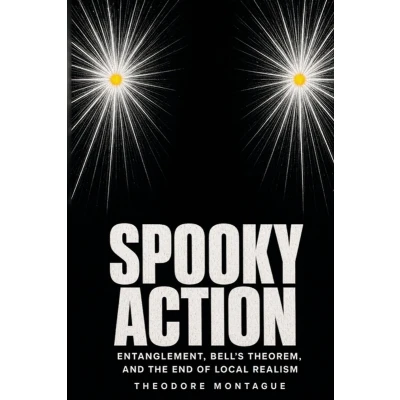
Two particles. Measure one in Vienna, measure the other on a mountain in China, and the answers match more often than anything sitting quietly inside them could arrange. This was supposed to be impossible. Einstein thought it was a flaw. He argued for thirty years that the correlations had to come from something the particles carried with them all along, like two gloves packed into two boxes. Open one box, see a left glove, and you instantly know the other is a right. Nothing spooky, just information you did not have yet. For three decades nobody could tell whether he was right, because nobody knew what experiment would settle it. Then a physicist at CERN, working on the problem in his spare time, found a way to put the question to nature as a number. Thirty-eight chapters. No equations to work through. The full argument, from a hotel in Brussels in 1927 to a Nobel Prize in 2022. - What the 1935 paper actually claimed, which is not what it is usually said to have claimed - The reply that everyone cites and almost nobody has read - Where the famous cat came from, and what it was really an argument about - The theorem, built slowly, with nothing hidden - What the inequality does not say, which matters more than what it does - The loopholes, named and numbered, and twenty-five years of closing them - The 2015 experiment that shut the last door - Entangling two particles that have never met, and never coexisted - Why teleportation is real and why nothing is transported - The hard proof that this cannot be used to send a message - Keys made of photons, and entanglement beamed down from orbit - What a quantum computer is actually doing, without the marketing - Why decoherence is entanglement with everything else - The interpretations, briefly and fairly, with the costs of each stated Including a catalogue of the misreadings. Faster-than-light communication, consciousness collapsing wavefunctions, the universe as a hologram of your attention. Each one traced to the specific step where it goes wrong, so you can spot it yourself the next time it appears in a headline. This is the story of the strangest confirmed fact in physics, and of the century-long argument that turned a philosophical objection into an experiment, a technology, and a prize. Scroll up and start reading.
 Prijshistorie
* Prijshistorie bevat geen data van Amazon.
Prijzen voor het laatst bijgewerkt op:
 Gerelateerde resultaten
 Productspecificaties


