

€ 43,28 Gratis verzending

Uitgelicht
|
|
43,28 |
Naar shop
|

|
43,28 |
Naar shop
|

|
196,00 |
Naar shop
|
| VERGELIJK ALLE AANBIEDERS (3) | ||
 Beschrijving
Vergelijk aanbieders (3)
€ 43,28 Gratis verzending
€ 43,28 Gratis verzending
€ 196,00 Gratis verzending
Winkels met andere maten
Beschrijving
(1)
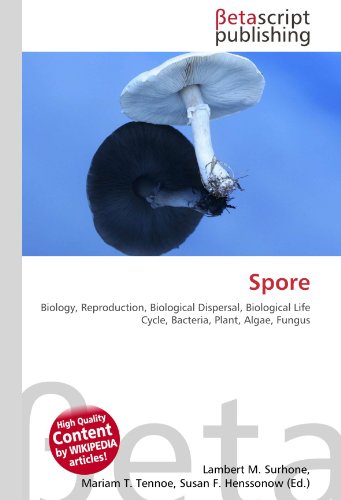
Please note that the content of this book primarily consists of articles available from Wikipedia or other free sources online. In biology, a spore is a reproductive structure that is adapted for dispersal and surviving for extended periods of time in unfavorable conditions. Spores form part of the life cycles of many bacteria, plants, algae, fungi and some protozoans. A chief difference between spores and seeds as dispersal units is that spores have very little stored food resources compared with seeds. Spores are usually haploid and unicellular and are produced by meiosis in the sporangium by the sporophyte. Once conditions are favorable, the spore can develop into a new organism using mitotic division, producing a multicellular gametophyte, which eventually goes on to produce gametes.
 Prijshistorie
 * Prijshistorie bevat geen data van Amazon, Amazon Marketplace.
Prijzen voor het laatst bijgewerkt op:
 Gerelateerde resultaten
 Productspecificaties


