








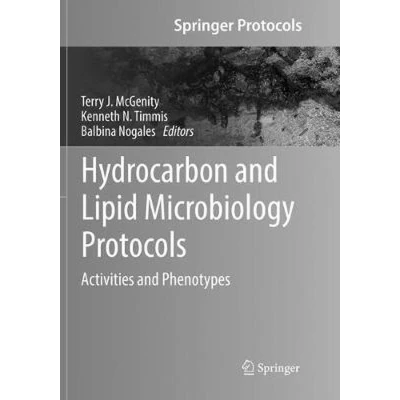
Springer Protocols Handbooks Hydrocarbon and Lipid Microbiology
Uitgelicht

|
105,00
99,99 |
Naar shop
|

|
116,69 |
Naar shop
|
 Beschrijving
Bol
This Volume presents relevant single-cell and single-molecule approaches in the study of microbes producing and utilizing hydrocarbons and lipids. While generically applicable for all microorganisms, the approaches described are, wherever possible, adapted to the field of study of hydrocarbon and lipid microbiology. The methods include basic procedures for isolating single cells by means of microfluidics and flow cytometry, and their cultivation in arrays as pure clones; for isolating, amplifying and sequencing single-cell genomes and transcriptomes; and for analysing single-cell metabolomes by means of Raman spectroscopy. Single-molecule approaches include the use of protein:fluorescent dye fusions for protein localization and methods for the production of cell division protostructures and lipid monolayers. Methods for the functional analysis of single cells include detection of metabolically active (protein-synthesizing) cells in environmental samples by bioorthogonal non-canonical amino acid tagging, Raman spectroscopy combined with stable isotope labelling and fluorescent in situ hybridisation, and visualization of single cells participating in gene transfer activity. Lastly, protocols are presented for single-cell biotechnological applications, including biofuel production. Hydrocarbon and Lipid Microbiology ProtocolsThere are tens of thousands of structurally different hydrocarbons, hydrocarbon derivatives and lipids, and a wide array of these molecules are required for cells to function. The global hydrocarbon cycle, which is largely driven by microorganisms, has a major impact on our environment and climate. Microbes are responsible for cleaning up the environmental pollution caused by the exploitation of hydrocarbon reservoirs and will also be pivotal in reducing our reliance on fossil fuels by providing biofuels, plastics and industrial chemicals. Gaining an understanding of the relevant functions of the wide range of microbes that produce, consume and modify hydrocarbons and related compounds will be key to responding to these challenges. This comprehensive collection of current and emerging protocols will facilitate acquisition of this understanding and exploitation of useful activities of such microbes.


 Beschrijving
(2)
Beschrijving
(2)
This Volume presents relevant single-cell and single-molecule approaches in the study of microbes producing and utilizing hydrocarbons and lipids. While generically applicable for all microorganisms, the approaches described are, wherever possible, adapted to the field of study of hydrocarbon and lipid microbiology. The methods include basic procedures for isolating single cells by means of microfluidics and flow cytometry, and their cultivation in arrays as pure clones; for isolating, amplifying and sequencing single-cell genomes and transcriptomes; and for analysing single-cell metabolomes by means of Raman spectroscopy. Single-molecule approaches include the use of protein:fluorescent dye fusions for protein localization and methods for the production of cell division protostructures and lipid monolayers. Methods for the functional analysis of single cells include detection of metabolically active (protein-synthesizing) cells in environmental samples by bioorthogonal non-canonical amino acid tagging, Raman spectroscopy combined with stable isotope labelling and fluorescent in situ hybridisation, and visualization of single cells participating in gene transfer activity. Lastly, protocols are presented for single-cell biotechnological applications, including biofuel production. Hydrocarbon and Lipid Microbiology ProtocolsThere are tens of thousands of structurally different hydrocarbons, hydrocarbon derivatives and lipids, and a wide array of these molecules are required for cells to function. The global hydrocarbon cycle, which is largely driven by microorganisms, has a major impact on our environment and climate. Microbes are responsible for cleaning up the environmental pollution caused by the exploitation of hydrocarbon reservoirs and will also be pivotal in reducing our reliance on fossil fuels by providing biofuels, plastics and industrial chemicals. Gaining an understanding of the relevant functions of the wide range of microbes that produce, consume and modify hydrocarbons and related compounds will be key to responding to these challenges. This comprehensive collection of current and emerging protocols will facilitate acquisition of this understanding and exploitation of useful activities of such microbes.
Bol PartnerThis Volume presents a comprehensive series of generic protocols for the genetic and genomic analysis of prokaryotic isolates. Genetic methods for functional analyses employ the latest cloning vectors, gene fusion methods and transposon mutagenesis systems, as well as systems for introducing protease-cleavage sequences into permissive sites in proteins under investigation. Genomic methods described include protocols for transcriptomics, shotgun proteomics, interactomics, metabolic profiling, and lipidomics. Bioinformatic tools for genome annotation, transcriptome display and the integration of transcriptomic data into genome-scale metabolic reconstructions are described. Protocols for 13C-based metabolic flux determinations and analysis of the hierarchical and metabolic regulation of fluxes through pathways are included. The Volume thus enables investigators to functionally analyse an isolate over the entire cellular range spanning the gene, the genome, the transcript repertoire, the proteome, the interactome, the metabolic network with its nodes and their regulatory hierarchies, and the metabolic fluxes and their physiological controls. Hydrocarbon and Lipid Microbiology ProtocolsThere are tens of thousands of structurally different hydrocarbons, hydrocarbon derivatives and lipids, and a wide array of these molecules are required for cells to function. The global hydrocarbon cycle, which is largely driven by microorganisms, has a major impact on our environment and climate. Microbes are responsible for cleaning up the environmental pollution caused by the exploitation of hydrocarbon reservoirs and will also be pivotal in reducing our reliance on fossil fuels by providing biofuels, plastics and industrial chemicals. Gaining an understanding of the relevant functions of the wide range of microbes that produce, consume and modify hydrocarbons and related compounds will be key to responding to these challenges. This comprehensive collection of current and emerging protocols will facilitate acquisition of this understanding and exploitation of useful activities of such microbes.
 Productspecificaties
| EAN |
|
|---|---|
| Maat |
|
 Prijshistorie
Prijzen voor het laatst bijgewerkt op:
 Gerelateerde resultaten


