


€ 47,99 Gratis verzending

Uitgelicht
|
|
47,99 |
Naar shop
|
| VERGELIJK ALLE AANBIEDERS (1) | ||
 Beschrijving
Vergelijk aanbieders (1)
€ 47,99 Gratis verzending
Winkels met andere maten
Beschrijving
(1)
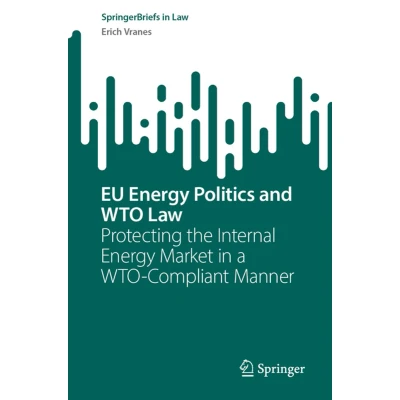
This book examines the relationship between EU energy politics and the law of the World Trade Organization (WTO), focusing on how the EU's Internal Energy Market can be promoted and protected in a way that is consistent with the requirements of WTO law. This book examines the relationship between EU energy politics and the law of the World Trade Organization (WTO), focusing on how the EU's Internal Energy Market can be promoted and protected in a way that is consistent with the requirements of WTO law. The need for a significant reorientation of the EU foreign policy, including its trade and energy policy, has become apparent in today’s rapidly changing geopolitical context. Many states are responding to this situation by seeking to increase their “strategic sovereignty”. In the EU, this reorientation is taking place under the leitmotivs of “strategic autonomy” in its foreign affairs and “open strategic autonomy” in the EU’s external trade context. Given that the many current geopolitical shifts also affect the international energy landscape, it has been argued that the EU needs to increase its autonomy in the field of energy policy. As the EU’s Internal Energy Market is central to this, it needs to be protected from undue foreign influence. In this respect, three horizontal unilateral tools that are part of the EU’s strategy of open strategic autonomy have been considered essential in relevant academic studies: the EU Investment Screening Regulation, the EU Carbon Border Adjustment Mechanism (CBAM) and the EU Foreign Subsidies Regulation. This study shows that while it is strategically imperative to protect the Internal Energy Market from undue foreign influence, it is difficult to achieve this objective in a WTO-compatible manner on the basis of the unilateral measures adopted by the EU. This book examines the relationship between EU energy politics and the law of the World Trade Organization (WTO), focusing on how the EU's Internal Energy Market can be promoted and protected in a way that is consistent with the requirements of WTO law. The need for a significant reorientation of the EU foreign policy, including its trade and energy policy, has become apparent in today’s rapidly changing geopolitical context. Many states are responding to this situation by seeking to increase their “strategic sovereignty”. In the EU, this reorientation is taking place under the leitmotivs of “strategic autonomy” in its foreign affairs and “open strategic autonomy” in the EU’s external trade context. Given that the many current geopolitical shifts also affect the international energy landscape, it has been argued that the EU needs to increase its autonomy in the field of energy policy. As the EU’s Internal Energy Market is central to this, it needs to be protected from undue foreign influence. In this respect, three horizontal unilateral tools that are part of the EU’s strategy of open strategic autonomy have been considered essential in relevant academic studies: the EU Investment Screening Regulation, the EU Carbon Border Adjustment Mechanism (CBAM) and the EU Foreign Subsidies Regulation. This study shows that while it is strategically imperative to protect the Internal Energy Market from undue foreign influence, it is difficult to achieve this objective in a WTO-compatible manner on the basis of the unilateral measures adopted by the EU.
 Productspecificaties
| EAN |
|
|---|---|
| Maat |
|
 Prijshistorie
 Prijzen voor het laatst bijgewerkt op:
 Gerelateerde resultaten


