

€ 18,77 Gratis verzending

Gesponsorde links
|
|
18,77 |
Naar shop
|

|
18,77 |
Naar shop
|

|
21,00 |
Naar shop
|
| VERGELIJK ALLE AANBIEDERS (3) | ||
 Beschrijving
Vergelijk aanbieders (3)
Gesponsorde links · Sommige shops betalen ons een vergoeding
€ 18,77 Gratis verzending
€ 18,77 Gratis verzending
€ 21,00 € 2,99 verzendkosten Totaal € 23,99
Winkels met andere maten
Beschrijving
(1)
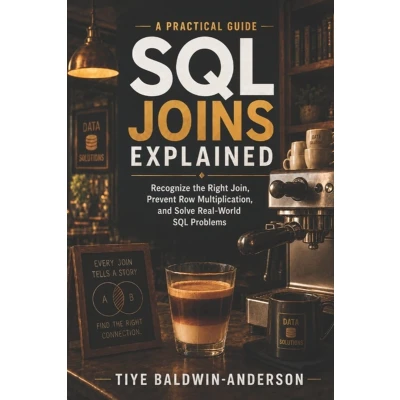
Most SQL developers know what INNER JOIN and LEFT JOIN do. The harder skill is recognizing which relationship operation a real problem requires-and noticing when a syntactically valid query quietly multiplies rows, removes data, or inflates totals. SQL JOINs Explained teaches JOINs through the Recognition Approach: start with the business question, identify the grain and cardinality, predict what should happen to the rows, and then choose the SQL operation that expresses that intent. Inside, you'll learn how to: - use INNER, LEFT, RIGHT, FULL OUTER, CROSS, and SELF JOINs deliberately - recognize semi-join and anti-join problems with EXISTS and NOT EXISTS - prevent fanout by pre-aggregating and deduplicating before joining - handle many-to-many bridges, range joins, hierarchies, and NULL traps - diagnose row-count explosions, incomplete composite keys, and accidental cross joins >The book includes recurring sample data, visible result sets, practical debugging procedures, a decision guide, and a JOIN debugging checklist. Principal examples were executed against SQLite, with portability guidance for PostgreSQL, SQL Server, Oracle, MySQL, and SQLite. Designed for developers, data analysts, database professionals, and SQL learners who want to move beyond memorizing JOIN syntax and start solving relationship problems with confidence.
 Prijshistorie
* Prijshistorie bevat geen data van Amazon, Amazon Marketplace.
Prijzen voor het laatst bijgewerkt op:
 Gerelateerde resultaten
 Productspecificaties


