








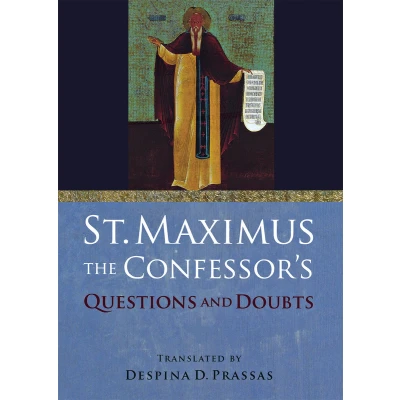
St. Maximus the Confessor's "Questions and Doubts"
Uitgelicht

|
25,41 |
Naar shop
|

|
27,45 |
Naar shop
|
 Beschrijving
Bol
Despina D. Prassas's translation of the Quaestiones et Dubia presents for the first time in English one of the Confessor's most significant contributions to early Christian biblical interpretation. Maximus the Confessor (580–662) was a monk whose writings focused on ascetical interpretations of biblical and patristic works. For his refusal to accept the Monothelite position supported by Emperor Constans II, he was tried as a heretic, his right hand was cut off, and his tongue was cut out. In his work, Maximus the Confessor brings together the patristic exegetical aporiai tradition and the spiritual-pedagogical tradition of monastic questions and responses. The overarching theme is the importance of the ascetical life. For Maximus, askesis is a lifelong endeavor that consists of the struggle and discipline to maintain control over the passions. One engages in the ascetical life by taking part in both theoria (contemplation) and praxis (action). To convey this teaching, Maximus uses a number of pedagogical tools including allegory, etymology, number symbolism, and military terminology. Prassas provides a rich historical and contextual background in her introduction to help ground and familiarize the reader with this work.


 Beschrijving
(2)
Beschrijving
(2)
Despina D. Prassas's translation of the Quaestiones et Dubia presents for the first time in English one of the Confessor's most significant contributions to early Christian biblical interpretation. Maximus the Confessor (580–662) was a monk whose writings focused on ascetical interpretations of biblical and patristic works. For his refusal to accept the Monothelite position supported by Emperor Constans II, he was tried as a heretic, his right hand was cut off, and his tongue was cut out. In his work, Maximus the Confessor brings together the patristic exegetical aporiai tradition and the spiritual-pedagogical tradition of monastic questions and responses. The overarching theme is the importance of the ascetical life. For Maximus, askesis is a lifelong endeavor that consists of the struggle and discipline to maintain control over the passions. One engages in the ascetical life by taking part in both theoria (contemplation) and praxis (action). To convey this teaching, Maximus uses a number of pedagogical tools including allegory, etymology, number symbolism, and military terminology. Prassas provides a rich historical and contextual background in her introduction to help ground and familiarize the reader with this work.
AmazonPagina's: 248, Paperback, Northern Illinois University Press
 Productspecificaties
 Gerelateerde producten


