


€ 215,00 Gratis verzending

Uitgelicht
|
|
215,00 |
Naar shop
|

|
215,90 |
Naar shop
|

|
215,90 |
Naar shop
|
| VERGELIJK ALLE AANBIEDERS (3) | ||
 Beschrijving
Vergelijk aanbieders (3)
€ 215,00 Gratis verzending
€ 215,90 Gratis verzending
€ 215,90 Gratis verzending
Winkels met andere maten
Beschrijving
(1)
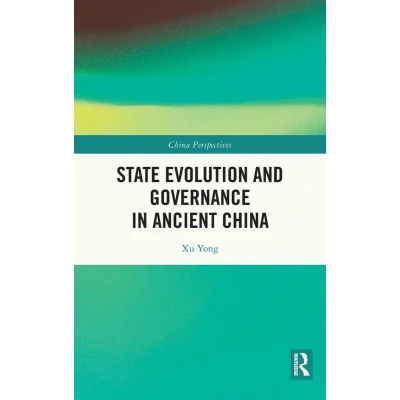
This book employs the analytical framework of "relational superposition" to explain the continuity, breakthroughs, and repetitions of Chinese state evolution. This book employs the analytical framework of "relational superposition" to explain the continuity, breakthroughs, and repetitions of Chinese state evolution. Specifically, it elucidates how, after Qin Shi Huang’s unification of China, the ancient Chinese state and its governance transcended the dominance of kinship relations and shifted to territorial relations. This shift formed a super-large territorial state. Sustaining this state was an imperial system that included new institutional factors, such as centralized power represented by imperial authority, the prefecture-county bureaucracy, and the household-official system. Factors associated with the long-standing kinship system reemerged in new forms within the imperial system. Simultaneously, the imperial state reproduced relationships between itself and mandarins, scholar-officials, peasants, merchants, and soldiers that evolved through interaction. Consisting of 13 chapters, the book explores the process of state formation and governance, as well as the dominant underlying relationships from the unification of China by Qin Shi Huang to the late Qing Dynasty, through thematic discussions. The book will be valuable for scholars and students of political science, history, and sociology.
 Prijshistorie
 * Prijshistorie bevat geen data van Amazon, Amazon Marketplace.
Prijzen voor het laatst bijgewerkt op:
 Gerelateerde resultaten
 Productspecificaties


