
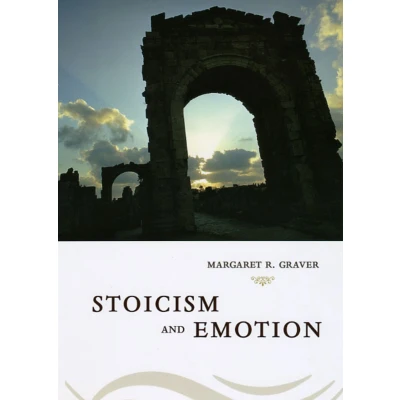
Stoicism and Emotion
Uitgelicht

|
29,43 |
Naar shop
|

|
29,43 |
Naar shop
|

|
29,43 |
Naar shop
|
| VERGELIJK ALLE AANBIEDERS (3) | ||
 Beschrijving
Bol
The Stoic philosophers of ancient Greece and Rome were interested in the emotions. This book shows that they did not simply advocate a suppression of feeling, as stoicism implies in English, but examined these powerful psychological responses, seeking to understand what attitude toward them expresses the deepest respect for human potential. On the surface, stoicism and emotion seem like contradictory terms. Yet the Stoic philosophers of ancient Greece and Rome were deeply interested in the emotions, which they understood as complex judgments about what we regard as valuable in our surroundings. "Stoicism and Emotion" shows that they did not simply advocate a suppression of feeling, as stoicism implies in today's English, but instead conducted a searching examination of these powerful psychological responses, seeking to understand what attitude toward them expresses the deepest respect for human potential. In this work, Margaret R. Graver gives a compelling new interpretation of the Stoic position. Drawing on a vast range of ancient sources, she argues that the chief demand of Stoic ethics is not that we should suppress or deny our feelings, but that we should perfect the rational mind at the core of every human being.


 Beschrijving
(1)
Beschrijving
(1)
The Stoic philosophers of ancient Greece and Rome were interested in the emotions. This book shows that they did not simply advocate a suppression of feeling, as stoicism implies in English, but examined these powerful psychological responses, seeking to understand what attitude toward them expresses the deepest respect for human potential. On the surface, stoicism and emotion seem like contradictory terms. Yet the Stoic philosophers of ancient Greece and Rome were deeply interested in the emotions, which they understood as complex judgments about what we regard as valuable in our surroundings. "Stoicism and Emotion" shows that they did not simply advocate a suppression of feeling, as stoicism implies in today's English, but instead conducted a searching examination of these powerful psychological responses, seeking to understand what attitude toward them expresses the deepest respect for human potential. In this work, Margaret R. Graver gives a compelling new interpretation of the Stoic position. Drawing on a vast range of ancient sources, she argues that the chief demand of Stoic ethics is not that we should suppress or deny our feelings, but that we should perfect the rational mind at the core of every human being.
 Productspecificaties
 Prijshistorie
* Prijshistorie bevat geen data van Amazon, Amazon Marketplace.
Prijzen voor het laatst bijgewerkt op:
 Gerelateerde resultaten


