
Strategies and Mechanisms for Enhancing Stress Tolerance in Wheat
Uitgelicht

|
71,99 |
Naar shop
|

|
88,10 |
Naar shop
|

|
88,10 |
Naar shop
|
| VERGELIJK ALLE AANBIEDERS (3) | ||
 Beschrijving
Bol
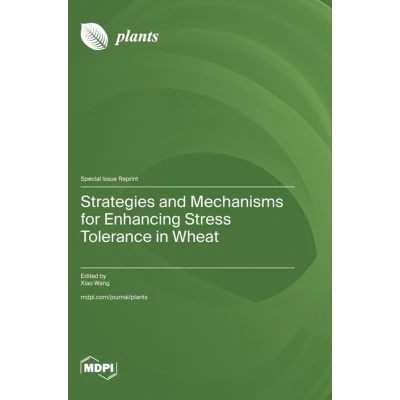
This Special Issue compiles 11 papers on molecular mechanisms, cultivation, and phenotypic monitoring to address climate-induced abiotic stresses. At the physiological and molecular level, research has-for the first time-revealed the fundamental role of the ascorbate-glutathione (AsA-GSH) cycle in young spikes resisting spring frost damage. Moreover, another study found that tebuconazole is able to enhance the cold resistance of winter wheat through an abscisic acid (ABA)-independent signaling pathway. In terms of cultivation regulation, researchers have successfully screened high-yielding and stress-tolerant genotypes suitable for semi-arid regions and clarified the direct contributions of harvest index and spike number to yield. Furthermore, the use of plant growth-promoting rhizobacteria (PGPB) isolated from drought-tolerant plants is able to effectively regulate the endogenous hormone and antioxidant enzyme, overcoming osmotic stress. Regarding phenotypic monitoring technology, this Special Issue introduces RGB imaging with Vision Transformer deep learning, enabling precise, non-destructive grain-filling monitoring for high-throughput identification of stress-tolerant phenotypes. Additionally, novel adult-plant resistance loci for wheat stripe rust were mapped, providing vital molecular markers.Overall, this Special Issue constructs a complete knowledge chain from basic theory to field practice, greatly enriching our systematic understanding of the formation of stress tolerance in wheat and providing solid scientific and technological support for the sustainable development of the wheat industry.


 Beschrijving
(1)
Beschrijving
(1)
This Special Issue compiles 11 papers on molecular mechanisms, cultivation, and phenotypic monitoring to address climate-induced abiotic stresses. At the physiological and molecular level, research has-for the first time-revealed the fundamental role of the ascorbate-glutathione (AsA-GSH) cycle in young spikes resisting spring frost damage. Moreover, another study found that tebuconazole is able to enhance the cold resistance of winter wheat through an abscisic acid (ABA)-independent signaling pathway. In terms of cultivation regulation, researchers have successfully screened high-yielding and stress-tolerant genotypes suitable for semi-arid regions and clarified the direct contributions of harvest index and spike number to yield. Furthermore, the use of plant growth-promoting rhizobacteria (PGPB) isolated from drought-tolerant plants is able to effectively regulate the endogenous hormone and antioxidant enzyme, overcoming osmotic stress. Regarding phenotypic monitoring technology, this Special Issue introduces RGB imaging with Vision Transformer deep learning, enabling precise, non-destructive grain-filling monitoring for high-throughput identification of stress-tolerant phenotypes. Additionally, novel adult-plant resistance loci for wheat stripe rust were mapped, providing vital molecular markers.Overall, this Special Issue constructs a complete knowledge chain from basic theory to field practice, greatly enriching our systematic understanding of the formation of stress tolerance in wheat and providing solid scientific and technological support for the sustainable development of the wheat industry.
 Productspecificaties
 Prijshistorie
* Prijshistorie bevat geen data van Amazon, Amazon Marketplace.
Prijzen voor het laatst bijgewerkt op:
 Gerelateerde resultaten


