

€ 9,23 Gratis verzending

Uitgelicht
|
|
9,23 |
Naar shop
|

|
10,50 |
Naar shop
|
| VERGELIJK ALLE AANBIEDERS (2) | ||
 Beschrijving
Vergelijk aanbieders (2)
€ 9,23 Gratis verzending
€ 10,50 € 2,99 verzendkosten Totaal € 13,49
Winkels met andere maten
Beschrijving
(1)
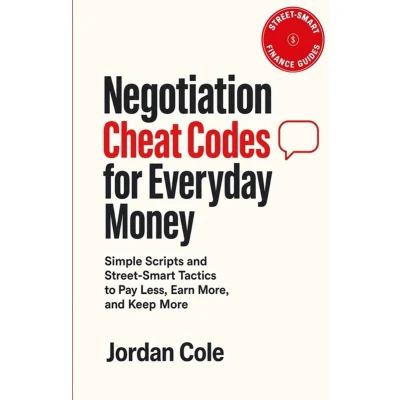
Your internet bill went up $25 without asking you. Your salary has stayed put without asking anyone. Both numbers move for people who know the words. Most of us pay the printed price, sign the renewal, and accept the offer, because negotiating feels like a personality trait we didn't get: pushy, awkward, vaguely embarrassing. So the famous negotiation books sit half-read. Readers keep saying the same things about them: the hostage stories feel like manipulation, not negotiation; the classics run on dated examples; the frameworks bury a few good nuggets in a lot of filler. None of them tells you what to actually say when the streaming price jumps or the landlord wants $150 more a month. This short guide does. It teaches one rule, the One Clear Ask: one conversation, one ask, one number, prepared on an index card and carried through five small moves. Then it hands you word-for-word scripts for the money situations of a normal month, ordered from a nearly unloseable first call to the conversations people postpone for years. The stats run with you: in one large consumer survey, 93 percent of people who negotiated a medical bill got somewhere. And the method is applicable to many types of negotiating: the same five moves work on a $17.99 subscription and a $58,000 job offer. Inside this book: - The prep card and the five moves: prep, open, ask, hold, land- Retention-call and fee-waiver scripts for bills, banks, and cards, with documented success rates- The itemized-bill move that shrinks medical bills, backed by federal rules- The rent-renewal letter, the raise conversation, and the job-offer counter email- The ask calendar that turns one-off wins into money recovered every year > By the last page, asking is just something you do: calmly, on a schedule, with a running tally of what it recovers.
 Prijshistorie
 * Prijshistorie bevat geen data van Amazon.
Prijzen voor het laatst bijgewerkt op:
 Gerelateerde resultaten
 Productspecificaties


