


€ 125,00 Gratis verzending

Uitgelicht
|
|
125,00 |
Naar shop
|

|
139,09 |
Naar shop
|

|
139,09 |
Naar shop
|
| VERGELIJK ALLE AANBIEDERS (3) | ||
 Beschrijving
Vergelijk aanbieders (3)
€ 125,00 Gratis verzending
€ 139,09 Gratis verzending
€ 139,09 Gratis verzending
Winkels met andere maten
Beschrijving
(1)
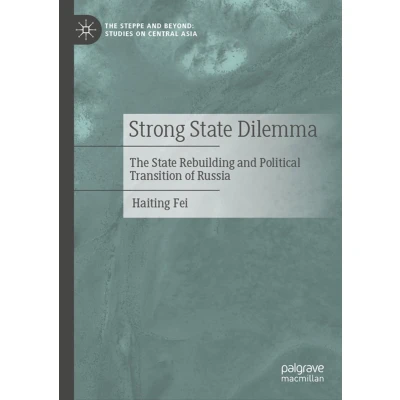
It shows that Russian state rebuilding followed an uneven strategy: the state did not restore itself everywhere, at every level, or in every sphere at once, but re-entered critical regions, sectors, and institutional junctures selectively and in stages. This book examines Russia’s strong-state dilemma: why Russia repeatedly seeks to overcome crisis, disorder, and failed transition by rebuilding a strong state, yet keeps falling back into a cycle in which restored control does not become stable governing capacity. It argues that post-Soviet political change should be understood not simply as failed democratization, but as a sequence of state-power loss, state rebuilding, and a new center-region balance. Focusing on Russia’s 85 federal subjects from 1991 to 2022, the book draws on an original database of 400+ governors, president-governor meeting transcripts, local media, elite biographies and interviews, institutional histories, formal rules, and electoral data. It shows that Russian state rebuilding followed an uneven strategy: the state did not restore itself everywhere, at every level, or in every sphere at once, but re-entered critical regions, sectors, and institutional junctures selectively and in stages. The book identifies two linked mechanisms: the separation of governors from governance tools, and the disconnect between elite selection and governance capacity. Through Samara, Sverdlovsk Oblast, St. Petersburg, and Moscow, it shows how different regional paths gradually converged into similar center-region structures. Its central conclusion is that the future of Russian state rebuilding depends on whether the state can build formal institutions capable of effectively constraining, organizing, and guiding political elites.
 Prijshistorie
 * Prijshistorie bevat geen data van Amazon, Amazon Marketplace.
Prijzen voor het laatst bijgewerkt op:
 Gerelateerde resultaten
 Productspecificaties


