








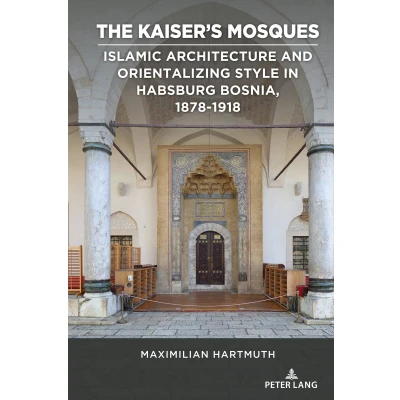
Studies in Central European Culture The Kaiser's Mosques
Uitgelicht

|
55,99 |
Naar shop
|
| VERGELIJK ALLE AANBIEDERS (1) | ||
 Beschrijving
Bol
This book highlights an understudied experiment at the intersection of 19th-century European and Islamic architectural histories. It draws attention to a significant body of buildings designed by architects trained in Central Europe for use by Muslims in Habsburg-ruled Bosnia-Herzegovina (1878-1918) This book highlights an understudied experiment at the intersection of 19th-century European and Islamic architectural histories. It draws attention to a body of buildings designed by architects trained in Central Europe for use by Muslims in Habsburg-ruled Bosnia-Herzegovina (1878–1918). They include mosques, madrasas, and other buildings corresponding to a traditional Islamic formal and functional typology. The composition and decoration, however, is the product of 19th-century European Historicist conduct. It became a prominent style for town halls and private residences; on occasion, it was also used for railway stations, schools, or hotels. The spread and concentration of buildings in this style in Bosnia is extraordinary. This monography not only fills a gap in an art history that has long turned a blind eye to Europe’s Southeast but also contributes to our understanding of European powers’ historical responses to the challenge of cultural diversity in territories under their control.


Vergelijk aanbieders (1)

 Beschrijving
(1)
Beschrijving
(1)
This book highlights an understudied experiment at the intersection of 19th-century European and Islamic architectural histories. It draws attention to a significant body of buildings designed by architects trained in Central Europe for use by Muslims in Habsburg-ruled Bosnia-Herzegovina (1878-1918) This book highlights an understudied experiment at the intersection of 19th-century European and Islamic architectural histories. It draws attention to a body of buildings designed by architects trained in Central Europe for use by Muslims in Habsburg-ruled Bosnia-Herzegovina (1878–1918). They include mosques, madrasas, and other buildings corresponding to a traditional Islamic formal and functional typology. The composition and decoration, however, is the product of 19th-century European Historicist conduct. It became a prominent style for town halls and private residences; on occasion, it was also used for railway stations, schools, or hotels. The spread and concentration of buildings in this style in Bosnia is extraordinary. This monography not only fills a gap in an art history that has long turned a blind eye to Europe’s Southeast but also contributes to our understanding of European powers’ historical responses to the challenge of cultural diversity in territories under their control.
 Productspecificaties
| EAN |
|
|---|---|
| Maat |
|
 Prijshistorie
Prijzen voor het laatst bijgewerkt op:
 Gerelateerde resultaten


