


€ 53,81 Gratis verzending

Uitgelicht
|
|
53,81 |
Naar shop
|
| VERGELIJK ALLE AANBIEDERS (1) | ||
 Beschrijving
Vergelijk aanbieders (1)
€ 53,81 Gratis verzending
Winkels met andere maten
Beschrijving
(1)
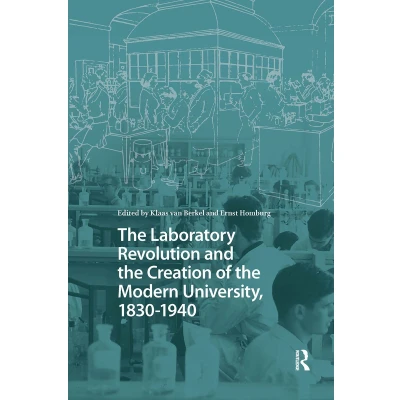
This volume explores how research laboratories transformed universities spatially, socially, and culturally. The modern research university originated in Europe in the second half of the nineteenth century, largely due to the creation and expansion of the teaching and research laboratory. The universities and the sciences underwent a laboratory revolution that fundamentally changed the nature of both. This revolutionary development began in chemistry, where Justus Liebig is credited with systematically employing his students in his ongoing research during the 1830s. Later, this development spread to other fields, including the social sciences and the humanities. The consequences for the universities were colossal. The expansion of the laboratories demanded extensive new building programs, reshaping the outlook of the university. The social structure of the university also diversified because of this laboratory expansion, while what it meant to be a scientist changed dramatically. This volume explores the spatial, social, and cultural dimensions of the rise of the modern research laboratory within universities and their consequent reshaping.
 Productspecificaties
| EAN |
|
|---|---|
| Maat |
|
 Prijshistorie
 Prijzen voor het laatst bijgewerkt op:
 Gerelateerde resultaten


