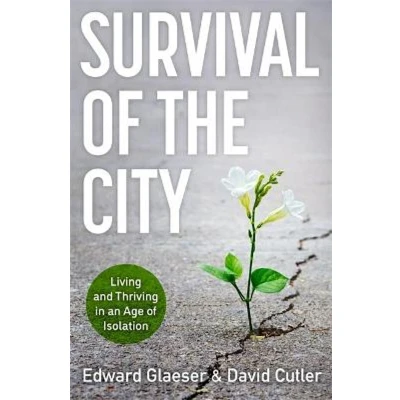

Survival of the City

Prijzen vanaf
25,99

Uitgelicht

VERGELIJK ALLE AANBIEDERS (2)

Beschrijving

Bol Partner One of our great urbanists and one of our great public health experts join forces to reckon with how cities are changing in the face of existential threats the pandemic has only accelerated Cities can make us sick. They always have—diseases spread more easily when more people are close to one another. And disease is hardly the only ill that accompanies urban density. Cities have been demonized as breeding grounds for vice and crime from Sodom and Gomorrah on. But cities have flourished nonetheless because they are humanity’s greatest invention, indispensable engines for creativity, innovation, wealth, and connection, the loom on which the fabric of civilization is woven. But cities now stand at a crossroads. During the global COVID crisis, cities grew silent as people worked from home—if they could work at all. The normal forms of socializing ground to a halt. How permanent are these changes? Advances in digital technology mean that many people can opt out of city life as never before. Will they? Are we on the brink of a post-urban world? City life will survive but individual cities face terrible risks, argue Edward Glaeser and David Cutler, and a wave of urban failure would be absolutely disastrous. In terms of intimacy and inspiration, nothing can replace what cities offer. Great cities have always demanded great management, and our current crisis has exposed fearful gaps in our capacity for good governance. It is possible to drive a city into the ground, pandemic or not. Glaeser and Cutler examine the evolution that is already happening, and describe the possible futures that lie before us: What will distinguish the cities that will flourish from the ones that won’t? In America, they argue, deep inequities in health care and education are a particular blight on the future of our cities; solving them will be the difference between our collective good health and a downward spiral to a much darker place.

Vergelijk aanbieders (2)

Shop
Prijs
Verzendkosten
Totale prijs
25,99
Gratis
25,99
Naar shop
Gratis Shipping Costs
27,38
gebruikt
Gratis
27,38
Naar shop
Gratis Shipping Costs
Beschrijving (2)
Bol Partner

One of our great urbanists and one of our great public health experts join forces to reckon with how cities are changing in the face of existential threats the pandemic has only accelerated Cities can make us sick. They always have—diseases spread more easily when more people are close to one another. And disease is hardly the only ill that accompanies urban density. Cities have been demonized as breeding grounds for vice and crime from Sodom and Gomorrah on. But cities have flourished nonetheless because they are humanity’s greatest invention, indispensable engines for creativity, innovation, wealth, and connection, the loom on which the fabric of civilization is woven. But cities now stand at a crossroads. During the global COVID crisis, cities grew silent as people worked from home—if they could work at all. The normal forms of socializing ground to a halt. How permanent are these changes? Advances in digital technology mean that many people can opt out of city life as never before. Will they? Are we on the brink of a post-urban world? City life will survive but individual cities face terrible risks, argue Edward Glaeser and David Cutler, and a wave of urban failure would be absolutely disastrous. In terms of intimacy and inspiration, nothing can replace what cities offer. Great cities have always demanded great management, and our current crisis has exposed fearful gaps in our capacity for good governance. It is possible to drive a city into the ground, pandemic or not. Glaeser and Cutler examine the evolution that is already happening, and describe the possible futures that lie before us: What will distinguish the cities that will flourish from the ones that won’t? In America, they argue, deep inequities in health care and education are a particular blight on the future of our cities; solving them will be the difference between our collective good health and a downward spiral to a much darker place.

Bol

Survival of the City is an essential guide to the past and future of our cities From New York to New Delhi, COVID-19 has had a devastating impact on our urban world, turning the physical proximity which is central to the creative energy of the city into a potentially deadly threat to our health and well being. Yet most of us live or work in cities. They are a vital part of both local and global economies and shape the lives we lead and our interactions with others. How can we adjust to this new reality and what lessons can we learn from the past?In this urgently relevant book, leading experts Edward Glaeser and David Cutler, examine the history and future of the global city. They argue the biggest threats are those we have created ourselves - inequalities in housing, health, work and education - and that we need to address these as a matter of urgency if our cities are to continue to thrive and drive economic growth and prosperity. They conclude by proposing some practical measures that governments and citizens need to act on to ensure the survival of the city around the world..


Productspecificaties

EAN
  • 9781529364323
  • 9780593297681
Maat


Prijshistorie

Prijzen voor het laatst bijgewerkt op:

Uitgelichte Keuze
25,99
Naar shop
