

€ 9,20 Gratis verzending

Gesponsorde links
|
|
9,20 |
Naar shop
|

|
9,20 |
Naar shop
|

|
10,50 |
Naar shop
|
| VERGELIJK ALLE AANBIEDERS (3) | ||
 Beschrijving
Vergelijk aanbieders (3)
Gesponsorde links · Sommige shops betalen ons een vergoeding
€ 9,20 Gratis verzending
€ 9,20 Gratis verzending
€ 10,50 € 2,99 verzendkosten Totaal € 13,49
Winkels met andere maten
Beschrijving
(1)
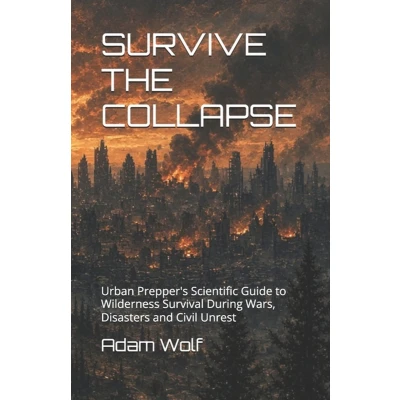
For most of human history, there were no cities, supermarkets, hospitals, or supply chains. There was no guarantee of safety-only knowledge, adaptation, and instinct.Yet humanity survived.Not only survived-but expanded, innovated, and eventually built civilizations.Modern humans, especially those living in urban environments, have lost contact with this reality. We have replaced biological intelligence with convenience. We assume that food must come packaged, that danger must come with warning, and that survival is a rare skill reserved for soldiers or specialists.This assumption is false.Human beings are the product of hundreds of thousands of years of evolution in the wild. During ice ages and long before agriculture, our diet was primarily animal-based. Our survival depended on understanding wildlife behavior, nutritional value, seasonal availability, and the risks of improper consumption.We were-and still are-apex predators.The problem is not that modern humans lack the ability to survive. The problem is that we have forgotten how.This book was written to restore that knowledge using modern science as a guide. It is not a romanticized survival fantasy, nor a collection of vague techniques. It is a practical, evidence- based framework for understanding how humans can live safely and effectively in the wild for extended periods-before, during, and after large-scale collapse events.A central focus of this book is nutrition-specifically, the prioritization of wild animal sources to meet protein, fat, vitamin, and mineral requirements essential for long-term survival. Improper nutritional decisions do not merely weaken the body; they destroy survival chances entirely.Equally important is understanding processing, cleaning, and cooking techniques. Many mod- ern fears surrounding wild animals are not rooted in danger itself, but in ignorance. When handled incorrectly, food becomes a risk. When handled correctly, it becomes life.You do not need elite military training to survive in the wild. Our ancestors did not have it either. What they had was knowledge, observation, and respect for natural laws.
 Prijshistorie
* Prijshistorie bevat geen data van Amazon, Amazon Marketplace.
Prijzen voor het laatst bijgewerkt op:
 Gerelateerde resultaten
 Productspecificaties


