


€ 132,87 Gratis verzending

Gesponsorde links
|
|
132,87 |
Naar shop
|

|
139,50 |
Naar shop
|

|
139,50 |
Naar shop
|
| VERGELIJK ALLE AANBIEDERS (3) | ||
 Beschrijving
Vergelijk aanbieders (3)
Gesponsorde links · Sommige shops betalen ons een vergoeding
€ 132,87 Gratis verzending
€ 139,50 Gratis verzending
€ 139,50 Gratis verzending
Winkels met andere maten
Beschrijving
(1)
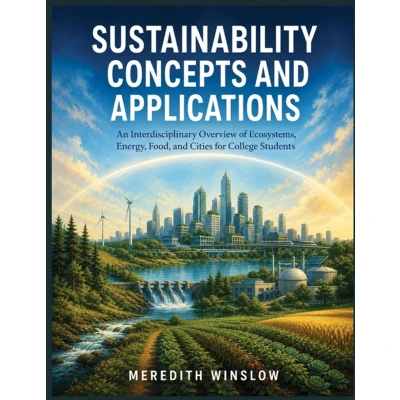
Understand sustainability as a working systems disciplineSustainability Concepts and Applications gives college students an interdisciplinary foundation for analyzing environmental pressures, technical choices, resource flows, and social outcomes. Instead of treating ecosystems, energy, food, materials, water, and cities as separate subjects, the book shows how they interact through stocks, feedbacks, thresholds, infrastructure, institutions, and human decisions.Across eighteen progressively organized chapters, readers learn to build balances, interpret indicators, examine uncertainty, compare energy technologies, follow water and material cycles, assess food systems, conduct life-cycle reasoning, and evaluate buildings, transportation, and urban form. Economics, policy, equity, and governance are integrated into the technical analysis rather than added as an afterthought.Designed for active learning- Clear explanations supported by governing equations and fully defined variables- Worked examples drawn from campuses, farms, utilities, buildings, transport networks, and cities- Technical tables and original diagrams that connect concepts to measurable systems- End-of-chapter problems with answers for independent practice and course review- A final integrated-assessment chapter that turns evidence into adaptive actionThe result is a practical college-level overview for introductory sustainability courses, interdisciplinary engineering programs, environmental studies, planning, and readers who need a quantitative bridge between ecological understanding and real-world design decisions.
 Prijshistorie
* Prijshistorie bevat geen data van Amazon, Amazon Marketplace.
Prijzen voor het laatst bijgewerkt op:
 Gerelateerde resultaten
 Productspecificaties


