








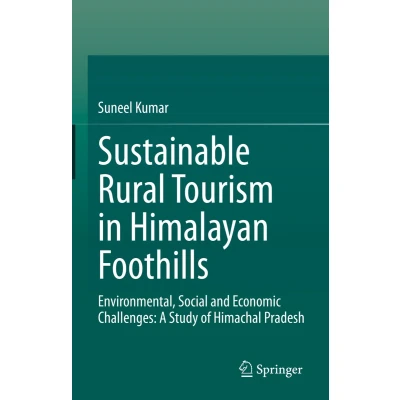
Sustainable Rural Tourism in Himalayan Foothills
Uitgelicht

|
139,00 |
Naar shop
|
 Beschrijving
Bol
This book discusses the development of the rural tourism industry in the Himalayan region, specifically in the region of Himachal Pradesh (HP), from the perspective of different stakeholders in the tourism industry. This book discusses the development of the rural tourism industry in the Himalayan region, specifically in the region of Himachal Pradesh (HP), from the perspective of different stakeholders in the tourism industry. It examines the current status and trends of rural tourism in HP, discusses the challenges faced in response to the vulnerability of the Himalayas to global climate change, and evaluates the consequences of rural tourism on the socio-economic structure in HP to sustainably formulate a framework for promoting financial and social inclusion. This framework covers flexible strategies for planning rural tourism development, assesses the role of technology in the tourism industry in achieving the objective of social and financial inclusion, and identifies the factors influencing a tourist’s decision to undertake rural tourism and develop a hierarchical relationship among those factors. The book will be of interest to studentsand researchers of sustainable rural tourism and tourism economics, as well as stakeholders from various sectors aiming to sustainably improve the ecological and economic fragility of the Himalayas due to climate change. This book discusses the development of the rural tourism industry in the Himalayan region, specifically in the region of Himachal Pradesh (HP), from the perspective of different stakeholders in the tourism industry. It examines the current status and trends of rural tourism in HP, discusses the challenges faced in response to the vulnerability of the Himalayas to global climate change, and evaluates the consequences of rural tourism on the socio-economic structure in HP to sustainably formulate a framework for promoting financial and social inclusion. This framework covers flexible strategies for planning rural tourism development, assesses the role of technology in the tourism industry in achieving the objective of social and financial inclusion, and identifies the factors influencing a tourist’s decision to undertake rural tourism and develop a hierarchical relationship among those factors. The book will be of interest to studentsand researchers of sustainable rural tourism and tourism economics, as well as stakeholders from various sectors aiming to sustainably improve the ecological and economic fragility of the Himalayas due to climate change.


Vergelijk aanbieders (1)

 Beschrijving
(1)
Beschrijving
(1)
This book discusses the development of the rural tourism industry in the Himalayan region, specifically in the region of Himachal Pradesh (HP), from the perspective of different stakeholders in the tourism industry. This book discusses the development of the rural tourism industry in the Himalayan region, specifically in the region of Himachal Pradesh (HP), from the perspective of different stakeholders in the tourism industry. It examines the current status and trends of rural tourism in HP, discusses the challenges faced in response to the vulnerability of the Himalayas to global climate change, and evaluates the consequences of rural tourism on the socio-economic structure in HP to sustainably formulate a framework for promoting financial and social inclusion. This framework covers flexible strategies for planning rural tourism development, assesses the role of technology in the tourism industry in achieving the objective of social and financial inclusion, and identifies the factors influencing a tourist’s decision to undertake rural tourism and develop a hierarchical relationship among those factors. The book will be of interest to studentsand researchers of sustainable rural tourism and tourism economics, as well as stakeholders from various sectors aiming to sustainably improve the ecological and economic fragility of the Himalayas due to climate change. This book discusses the development of the rural tourism industry in the Himalayan region, specifically in the region of Himachal Pradesh (HP), from the perspective of different stakeholders in the tourism industry. It examines the current status and trends of rural tourism in HP, discusses the challenges faced in response to the vulnerability of the Himalayas to global climate change, and evaluates the consequences of rural tourism on the socio-economic structure in HP to sustainably formulate a framework for promoting financial and social inclusion. This framework covers flexible strategies for planning rural tourism development, assesses the role of technology in the tourism industry in achieving the objective of social and financial inclusion, and identifies the factors influencing a tourist’s decision to undertake rural tourism and develop a hierarchical relationship among those factors. The book will be of interest to studentsand researchers of sustainable rural tourism and tourism economics, as well as stakeholders from various sectors aiming to sustainably improve the ecological and economic fragility of the Himalayas due to climate change.
 Productspecificaties
| EAN |
|
|---|---|
| Maat |
|
 Prijshistorie
Prijzen voor het laatst bijgewerkt op:
 Gerelateerde resultaten


