
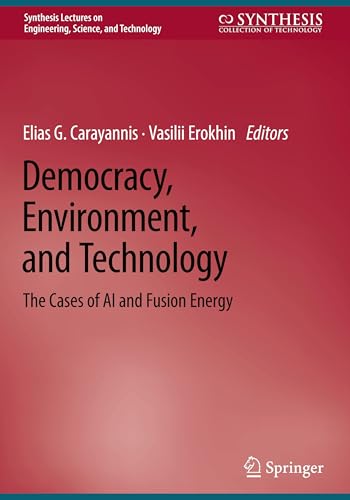
Synthesis Lectures on Engineering, Science, and Technology Democracy, Environment,
Prijzen vanaf
42,79

Uitgelicht

VERGELIJK ALLE AANBIEDERS (3)

Beschrijving

Bol In these chapters, ideas that fusion energy, if developed inclusively, could revolutionize global energy systems and combat climate change are discussed, and governance models, such as international commissions and public-private partnerships, to ensure equitable access and ethical development are proposed. The 21st century is witnessing an unprecedented convergence of transformative technologies that promise to reshape global energy systems, governance, and societal well-being. Among these, Public Interest Technology (PIT), Artificial Intelligence (AI), and Fusion Energy stand out as critical domains with the potential to drive sustainable development, economic growth, and equitable progress. This book explores the concepts of PIT, AI, and Fusion, in ten chapters. It begins by tracing the evolution of PIT, emphasizing its role in addressing global challenges through socio-technical frameworks. Key themes include the ethical and practical challenges of PIT, such as data privacy, algorithmic bias, and funding barriers, as well as its potential to drive equitable solutions. The importance of stakeholder inclusion, particularly from the Global South, and frameworks to manage uncertainties in technology investments are highlighted. Case studies illustrate successful PIT implementations, such as AI-driven sustainability projects and fusion energy initiatives, while underscoring the need for interdisciplinary collaboration and adaptive governance. The later chapters focus on fusion energy as a PIT advocating for open science, international cooperation, and flexible investment strategies to overcome technical and financial hurdles. In these chapters, ideas that fusion energy, if developed inclusively, could revolutionize global energy systems and combat climate change are discussed, and governance models, such as international commissions and public-private partnerships, to ensure equitable access and ethical development are proposed. Similarly, discussions on AI stress its dual potential to either exacerbate inequality or democratize opportunities, depending on policy and implementation.

Vergelijk aanbieders (3)

Shop
Prijs
Verzendkosten
Totale prijs
42,79
Gratis
42,79
Naar shop
Gratis Shipping Costs
42,79
Gratis
42,79
Naar shop
Gratis Shipping Costs
45,95
Gratis
45,95
Naar shop
Gratis Shipping Costs
Beschrijving (1)

In these chapters, ideas that fusion energy, if developed inclusively, could revolutionize global energy systems and combat climate change are discussed, and governance models, such as international commissions and public-private partnerships, to ensure equitable access and ethical development are proposed. The 21st century is witnessing an unprecedented convergence of transformative technologies that promise to reshape global energy systems, governance, and societal well-being. Among these, Public Interest Technology (PIT), Artificial Intelligence (AI), and Fusion Energy stand out as critical domains with the potential to drive sustainable development, economic growth, and equitable progress. This book explores the concepts of PIT, AI, and Fusion, in ten chapters. It begins by tracing the evolution of PIT, emphasizing its role in addressing global challenges through socio-technical frameworks. Key themes include the ethical and practical challenges of PIT, such as data privacy, algorithmic bias, and funding barriers, as well as its potential to drive equitable solutions. The importance of stakeholder inclusion, particularly from the Global South, and frameworks to manage uncertainties in technology investments are highlighted. Case studies illustrate successful PIT implementations, such as AI-driven sustainability projects and fusion energy initiatives, while underscoring the need for interdisciplinary collaboration and adaptive governance. The later chapters focus on fusion energy as a PIT advocating for open science, international cooperation, and flexible investment strategies to overcome technical and financial hurdles. In these chapters, ideas that fusion energy, if developed inclusively, could revolutionize global energy systems and combat climate change are discussed, and governance models, such as international commissions and public-private partnerships, to ensure equitable access and ethical development are proposed. Similarly, discussions on AI stress its dual potential to either exacerbate inequality or democratize opportunities, depending on policy and implementation.


Productspecificaties

Merk Springer
EAN
  • 9783032031266
Maat

Prijzen voor het laatst bijgewerkt op:

Uitgelichte Keuze
42,79
Naar shop