


€ 97,99 Gratis verzending

Uitgelicht
|
|
97,99 |
Naar shop
|
| VERGELIJK ALLE AANBIEDERS (1) | ||
 Beschrijving
Vergelijk aanbieders (1)
€ 97,99 Gratis verzending
Winkels met andere maten
Beschrijving
(1)
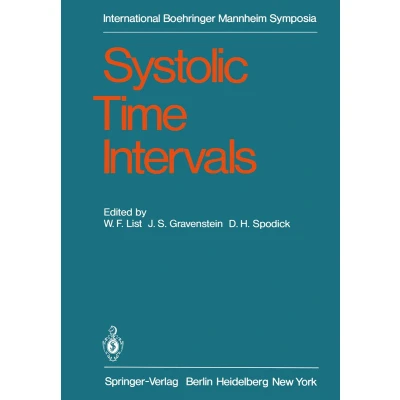
Systolic time intervals (STI), known for a long time, were revived in the early 1960s by Arnold Weissler. The first important papers came from him; they eval- uated STI measurements in larger populations, established norms, and compared STI measurements with other invasive methods. Since then, several hundred ex- cellent papers have appeared using and evaluating STI measurements for myo- cardial function studies. These have appeared in prominent cardiologic journals throughout the world as well as in the anesthesiologic and pediatric medical literature. When consent of subjects to medical experimentation became a prominent and necessary issue, the noninvasiveness of investigative methods in medicine, wher- ever possible, resolved the issue. Noninvasive measurements of STI proved to be an excellent monitoring parameter of cardiac function during anesthesia, and anesthesiologists wished to learn more from the long experience of cardiologists with STI. An organizing committee of List, Gravenstein, and Spodick was accordingly formed. Invitations were issued for an international conference on STI. With more than 40 clinical researchers using STI, it was, of course, difficult to hear them all within two days. A generous sponsor, the AVL Company, Graz-Schaffhausen, made possible the International Conference at Graz. Publication of the proceedings of the Confer- ence became feasible with help from Boehringer-Mannheim.
 Productspecificaties
| EAN |
|
|---|---|
| Maat |
|
 Prijshistorie
Prijzen voor het laatst bijgewerkt op:
 Gerelateerde resultaten


