


€ 30,99 Gratis verzending

Gesponsorde links
|
|
30,99 |
Naar shop
|

|
32,28 |
Naar shop
|
| VERGELIJK ALLE AANBIEDERS (2) | ||
 Beschrijving
Vergelijk aanbieders (2)
Gesponsorde links · Sommige shops betalen ons een vergoeding
€ 30,99 Gratis verzending
€ 32,28 Gratis verzending
Winkels met andere maten
Beschrijving
(1)
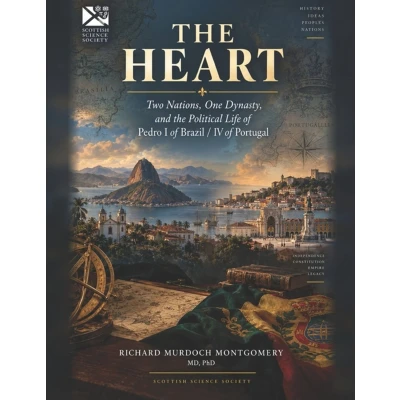
To begin with a map of Brazil is already to begin too late. The political unit from which Brazil emerged was not a bounded American proto-nation but a Portuguese monarchy dispersed across oceans. Its authority joined metropolitan institutions to Atlantic islands, African possessions, commercial enclaves and American captaincies through overlapping jurisdictions rather than through the clean territorial sovereignty familiar to later constitutional states. The monarchy was maritime not as a poetic description but as an administrative condition. Ships carried orders, offices, credit, soldiers, enslaved captives, ecclesiastical appointments and news. Distance did not abolish sovereignty; it made sovereignty intermittent, negotiated and expensive.¹The word 'empire' can mislead if it summons a single pyramid of command descending smoothly from Lisbon. In practice the Portuguese Crown governed through delegation. Governors, captains-general, municipal councils, magistrates, ecclesiastical bodies, contractors and local magnates translated royal norms into regional practice. Jurisdiction overlapped. A royal order might be formally universal and locally delayed, reinterpreted or resisted. The centre therefore possessed less of a modern state's continuous administrative penetration than the ceremonial vocabulary of monarchy suggests. Yet this weakness was also a source of resilience. Because authority was distributed, the system could absorb local variation without immediately treating every divergence as secession.The Crown's most durable instrument was not omnipotence but arbitration. Competing groups appealed upwards against one another: merchants against governors, municipal elites against fiscal officers, religious orders against settlers, frontier commanders against neighbouring jurisdictions. Lisbon's distance could be infuriating, but it also made the Crown useful as a court of last resort. In this sense monarchy operated as a technology for connecting disputes that were otherwise regional. The political geometry was not a wheel with perfect spokes. It was a web whose knots differed greatly in strength.The Atlantic scale is crucial. Brazilian sugar depended on European credit, African labour and maritime insurance; mining altered routes within America but also fiscal and monetary relations with Lisbon; frontier expansion relied on local violence while seeking retrospective legalisation from royal authority. Portuguese America was thus not merely a colony exporting commodities to Europe. It was one zone within a circulating system of people, capital, information and coercion. The ocean connected precisely because it separated.
 Prijshistorie
* Prijshistorie bevat geen data van Amazon.
Prijzen voor het laatst bijgewerkt op:
 Gerelateerde resultaten
 Productspecificaties


