

€ 9,21 Gratis verzending

Uitgelicht
|
|
9,21 |
Naar shop
|

|
9,21 |
Naar shop
|

|
10,50 |
Naar shop
|
| VERGELIJK ALLE AANBIEDERS (3) | ||
 Beschrijving
Vergelijk aanbieders (3)
€ 9,21 Gratis verzending
€ 9,21 Gratis verzending
€ 10,50 € 2,99 verzendkosten Totaal € 13,49
Winkels met andere maten
Beschrijving
(1)
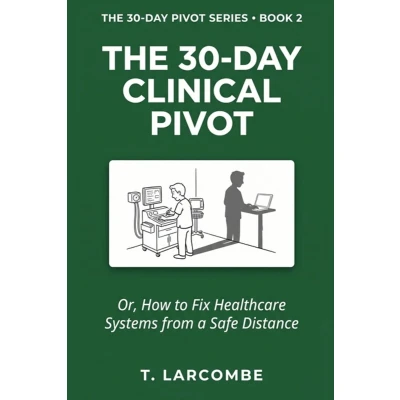
You know where the software breaks. Not because you read the incident reports, but because you were there when it broke, at the end of a twelve-hour shift, in conditions that bore no resemblance to the ones described in the implementation manual. You know what the EHR actually does when a ward is short-staffed. You know which workarounds everyone uses and why they exist and what happens when a new system eliminates them without understanding what they were for. That knowledge is worth considerably more outside the institution than inside it. The health-tech industry is in permanent, urgent need of people who understand both what clinical software is supposed to do and what it actually does when a clinician encounters it under real conditions. They are paying well for this understanding. The gap between clinical expertise and health-tech consulting is not a skills gap. It is a positioning gap. This book closes that gap in thirty days. You will learn how to translate your clinical experience into the language of consulting engagements, build the case study that proves you can bridge the gap between clinical reality and software design, and position yourself for advisory roles, health-tech implementation work, and independent consulting without stepping off a financial cliff in the process. You do not need to become a software engineer. You need to become the person in the room who can tell the software engineers exactly what needs to change, and why, and what it costs when they get it wrong. For nurses, physicians, allied health professionals, paramedics, and clinical informatics specialists considering a move into health-tech consulting, advisory work, or independent practice. Part of The 30-Day Micro-Pivot Playbooks series. Each book stands alone.
 Prijshistorie
 * Prijshistorie bevat geen data van Amazon, Amazon Marketplace.
Prijzen voor het laatst bijgewerkt op:
 Gerelateerde resultaten
 Productspecificaties


