


€ 25,51 Gratis verzending

Uitgelicht
|
|
25,51 |
Naar shop
|

|
61,16 |
Naar shop
|
| VERGELIJK ALLE AANBIEDERS (2) | ||
 Beschrijving
Vergelijk aanbieders (2)
€ 25,51 Gratis verzending
€ 61,16 Gratis verzending
Winkels met andere maten
Beschrijving
(1)
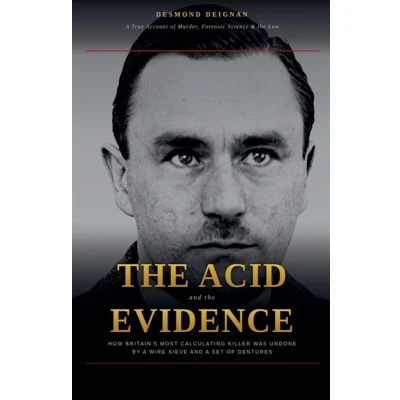
In September 1944, John George Haigh struck a former employer across the head in a Kensington basement, submerged the body in a drum of concentrated sulphuric acid, and poured the liquefied remains down a drain. He believed he had committed the perfect crime. He had spent years in Lincoln Prison designing the method, validating it on field mice, and constructing a legal theory that he believed made murder prosecution impossible in the absence of a physical body. He was wrong about the law. He was wrong about the chemistry. And the gap between his confidence and his error would eventually be filled by a wire sieve, a forensic pathologist's patience, and a set of acrylic dentures sitting in a Crawley rubble pile.Between 1944 and 1949, Haigh killed six people - three members of the McSwan family, a physician and his wife, and a wealthy widow - dissolving each in acid and financing his comfortable life at a prestigious South Kensington hotel on the proceeds. His eventual arrest, confession, and trial at Lewes Assizes became a landmark in British forensic science, legal history, and the law of contempt of court.Desmond Deignan's forensic account reconstructs the case in full: the killer's formation, his method, his victims, and the institutions that - imperfectly but decisively - got the essential thing right.
 Prijshistorie
* Prijshistorie bevat geen data van Amazon.
Prijzen voor het laatst bijgewerkt op:
 Gerelateerde resultaten
 Productspecificaties


