

€ 85,92 Gratis verzending

Uitgelicht
|
|
85,92 |
Naar shop
|

|
85,99 |
Naar shop
|

|
86,42 |
Naar shop
|
| VERGELIJK ALLE AANBIEDERS (3) | ||
 Beschrijving
Vergelijk aanbieders (3)
€ 85,92 Gratis verzending
€ 85,99 Gratis verzending
€ 86,42 Gratis verzending
Winkels met andere maten
Beschrijving
(1)
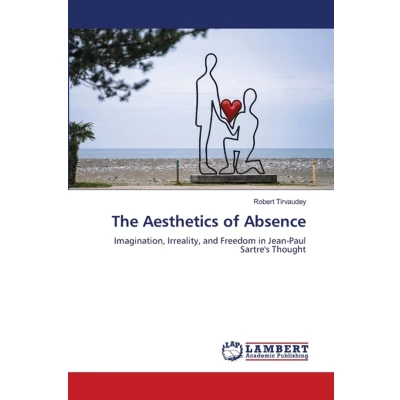
This essay offers a study of Jean-Paul Sartre's aesthetics through a central question: if art emerges from absence, how does this absence become a power of creation and freedom? The analysis argues that, in Sartre's thought, the artwork is not a simple reproduction of reality but the expression of a consciousness capable of transcending the given through imagination. Drawing on The Imaginary, Being and Nothingness, and What Is Literature?, this essay examines the relations between unreality, intentionality, freedom, and responsibility. The first part establishes the phenomenological foundations of aesthetic experience by analyzing image-consciousness, the unreal object, and the creative function of nihilation. The second part studies the constitution of the aesthetic object as an encounter between artwork, creator, and spectator, demonstrating that art is founded upon an appeal addressed to another freedom. The third part explores the philosophical consequences of Sartrean aesthetics through literature, the other arts, and the limits of Sartre's ontology, particularly in relation to Merleau-Ponty and Adorno.
 Prijshistorie
 * Prijshistorie bevat geen data van Amazon Marketplace, Amazon.
Prijzen voor het laatst bijgewerkt op:
 Gerelateerde resultaten
 Productspecificaties


