


€ 28,99 Gratis verzending

Uitgelicht
|
|
28,99 |
Naar shop
|

|
31,15 |
Naar shop
|

|
31,15 |
Naar shop
|
| VERGELIJK ALLE AANBIEDERS (3) | ||
 Beschrijving
Vergelijk aanbieders (3)
€ 28,99 Gratis verzending
€ 31,15 Gratis verzending
€ 31,15 Gratis verzending
Winkels met andere maten
Beschrijving
(1)
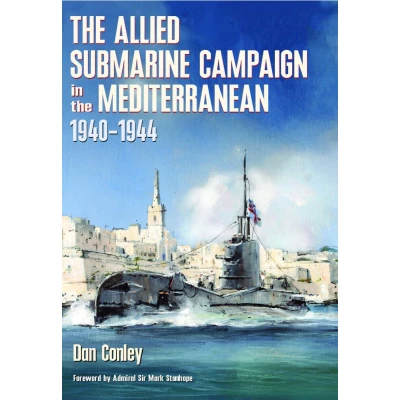
The Allied submarine campaign in the Mediterranean Sea lasted from June 1940, when Italy entered WWII, until November 1944 when German forces had largely withdrawn from Greece and the eastern Mediterranean. Polish, Greek and Netherlands navies were key allies. The most important area of action was centered around Malta. Submarines based there successfully attacked Mussolini’s convoys supplying Axis forces in North Africa. During the critical year of 1942, these boats were responsible for over half of the sinkings of Italian shipping on this route. In doing so they were a key factor in thwarting Rommel’s attempts to reach Cairo and the Suez Canal. Notably, during the grim days of early 1942, when the British Eastern Mediterranean Fleet had been virtually neutralised, these submarines prevented Italy from achieving mastery of the central Mediterranean. However, that is only part of the story. Allied submarines undertook scores of special operations – the covert landing of agents, commando groups and underwater saboteurs who were tasked to attack shipping in harbour. Importantly, they were pivotal in undertaking beach surveys and detection of minefields prior to the Allied ‘Torch’ landings in North Africa, and subsequent landings in Sicily and mainland Italy. When convoys to Malta were subject to almost unsustainable losses, the larger submarines also supplied the beleaguered island with vital food, stores and munitions, and critically important aviation spirit. But this came at a cost, and Britain lost almost half of its submarines committed to this campaign with, in many cases, their entire crews perishing. However, a few thousand brave men had destroyed, or severely damaged, scores of Axis warships and submarines and sank a large proportion of the Italian merchant fleet. Dan Conley draws on recently accessed British and Italian war records to deliver a much more comprehensive description of the campaign than previously published. Uniquely, he rigorously analyses the campaign events and actions from the perspective of an experienced submarine captain, who has actually had sea experience in a WWII submarine. He distinctively sets out a remarkable but somewhat understated history, including key extracts from commanding officers’ patrol reports. Importantly, he highlights the largely unacknowledged bravery and tenacity of the Allied submariner, who at times endured a fatality rate approaching fifty percent.
 Prijshistorie
 * Prijshistorie bevat geen data van Amazon, Amazon Marketplace.
Prijzen voor het laatst bijgewerkt op:
 Gerelateerde resultaten
 Productspecificaties


