








The Archaeological Heritage of Oman Hinterland Monuments Ancient Nomads
Uitgelicht

|
90,37 |
Naar shop
|
 Beschrijving
Bol
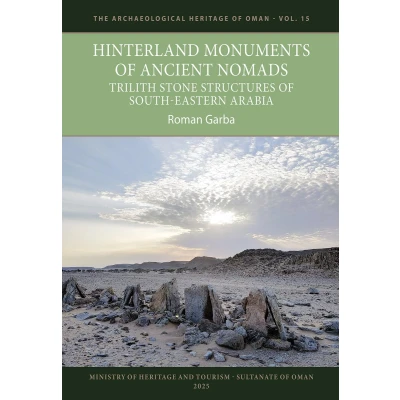
This pioneering study explores 2000-year-old trilith monuments in Southeastern Arabia through analysis of 921 sites. It uncovers their wide distribution, early origins (410 BCE), and roles in mobility, ritual, and ancestor cults. Spatio-temporal data reveals shifting cultural patterns, linking triliths to ancient nomadic lifeways. This book presents the first dedicated study of the enigmatic 2000-year-old trilith monuments in Southeastern Arabia, revealing their geographical extent, chronological range, and cultural significance. Based on an analysis of 921 trilith sites comprising almost four thousand clusters. the book identifies four distribution hotspots across Yemen and Oman, extending the known chronology of triliths back to 410 BCE. Statistical analyses suggest that triliths played a role in mobility and rituals for safe passage, pre-Islamic water rites, and rituals associated with ancestor cults. A spatio-temporal analysis has traced the migration patterns of populations linked to trilith monuments, revealing their spread from southern Oman in the 5th century BCE to eastern Oman by the 1st century BCE, before retreating southwards in possible connection with the semi-historical migration of the Azd tribes. The book concludes that triliths were multifunctional spaces rather than structures built for a single purpose. Two topical chapters describe the relocation of a trilith to the National Museum in Muscat and the challenges involved in identifying trilith monuments using remote sensing. This book will serve as an invaluable reference volume for scholars working on the stone monuments of Arabia. It contains a repository of extensive data that is essential for understanding ancient nomadic societies in southern Arabia.


Vergelijk aanbieders (1)

 Beschrijving
(1)
Beschrijving
(1)
This pioneering study explores 2000-year-old trilith monuments in Southeastern Arabia through analysis of 921 sites. It uncovers their wide distribution, early origins (410 BCE), and roles in mobility, ritual, and ancestor cults. Spatio-temporal data reveals shifting cultural patterns, linking triliths to ancient nomadic lifeways. This book presents the first dedicated study of the enigmatic 2000-year-old trilith monuments in Southeastern Arabia, revealing their geographical extent, chronological range, and cultural significance. Based on an analysis of 921 trilith sites comprising almost four thousand clusters. the book identifies four distribution hotspots across Yemen and Oman, extending the known chronology of triliths back to 410 BCE. Statistical analyses suggest that triliths played a role in mobility and rituals for safe passage, pre-Islamic water rites, and rituals associated with ancestor cults. A spatio-temporal analysis has traced the migration patterns of populations linked to trilith monuments, revealing their spread from southern Oman in the 5th century BCE to eastern Oman by the 1st century BCE, before retreating southwards in possible connection with the semi-historical migration of the Azd tribes. The book concludes that triliths were multifunctional spaces rather than structures built for a single purpose. Two topical chapters describe the relocation of a trilith to the National Museum in Muscat and the challenges involved in identifying trilith monuments using remote sensing. This book will serve as an invaluable reference volume for scholars working on the stone monuments of Arabia. It contains a repository of extensive data that is essential for understanding ancient nomadic societies in southern Arabia.
 Productspecificaties
| EAN |
|
|---|---|
| Maat |
|
 Prijshistorie
Prijzen voor het laatst bijgewerkt op:
 Gerelateerde resultaten


