


€ 15,00 € 2,99 verzendkosten Totaal € 17,99

Uitgelicht
|
|
15,00 |
Naar shop
|

|
39,49 |
Naar shop
|

|
39,49 |
Naar shop
|
| VERGELIJK ALLE AANBIEDERS (3) | ||
 Beschrijving
Vergelijk aanbieders (3)
€ 15,00 € 2,99 verzendkosten Totaal € 17,99
€ 39,49 € 9,99 verzendkosten Totaal € 49,48
€ 39,49 € 9,99 verzendkosten Totaal € 49,48
Winkels met andere maten
Beschrijving
(1)
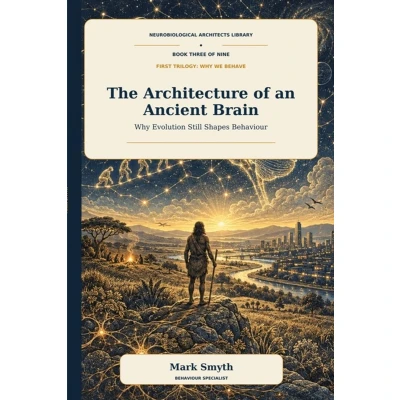
What if the brain is not malfunctioning, but remembering?The human brain was shaped over millions of years for a world of small groups, constant movement, immediate physical threats and deep dependence on other people. Modern life changed far more quickly than biology could follow. The result is an ancient survival system trying to navigate classrooms, workplaces, digital environments and social demands it was never designed to encounter.In The Architecture of an Ancient Brain, Mark Smyth travels further upstream to explore the evolutionary rules that continue to shape prediction, stress, belonging, neurodiversity and behaviour. He explains why the brain reacts before conscious thought catches up, why safety and connection remain biologically linked to survival, and why seemingly small events can activate powerful protective responses.Drawing on contemporary neuroscience, evolutionary biology and developmental understanding, the book examines:¿ How evolution shaped the brain's central survival priorities¿ Why the brain constantly predicts what will happen next¿ How safety, belonging and relationships regulate the nervous system¿ What chronic stress does to the brain and body¿ Why modern environments can overwhelm ancient biological systems¿ How neurodiversity can be understood through variation rather than deficit¿ How repeated safe experiences help the brain update old predictionsWritten in clear, compassionate language, this book connects complex science with the realities faced by parents, educators, clinicians and professionals supporting children and adults whose behaviour may be misunderstood. It challenges explanations based on blame, defiance or brokenness and replaces them with a more humane question: what is this nervous system predicting, protecting against or trying to survive?The Architecture of an Ancient Brain is Book Three of the Neurobiological Architects Library and completes the first trilogy, Why We Behave. Building on The River and the Source and Learning to Stay, it brings the biological, developmental, relational and evolutionary story of behaviour together.Its central message is both scientifically grounded and deeply hopeful: the brain is ancient and adaptive, but it is never beyond change. Through safety, relationship, repetition and meaningful experience, even long established predictions can be updated.Understanding the brain changes how we understand behaviour, and changing our understanding can transform how we respond.
 Prijshistorie
 * Prijshistorie bevat geen data van Amazon, Amazon Marketplace.
Prijzen voor het laatst bijgewerkt op:
 Gerelateerde resultaten
 Productspecificaties


