

€ 12,89 Gratis verzending

Gesponsorde links
|
|
12,89 |
Naar shop
|

|
12,89 |
Naar shop
|

|
13,00 |
Naar shop
|
| VERGELIJK ALLE AANBIEDERS (3) | ||
 Beschrijving
Vergelijk aanbieders (3)
Gesponsorde links · Sommige shops betalen ons een vergoeding
€ 12,89 Gratis verzending
€ 12,89 Gratis verzending
€ 13,00 € 2,99 verzendkosten Totaal € 15,99
Winkels met andere maten
Beschrijving
(1)
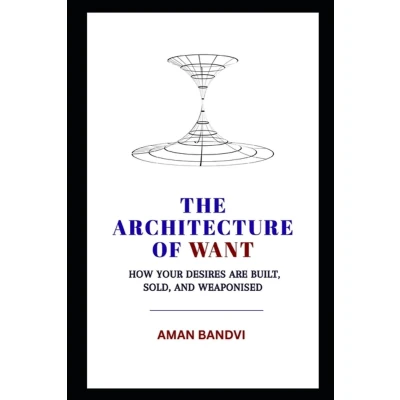
Five thousand years before Silicon Valley learned to hijack your attention, the Yoga Sūtras had already diagnosed the mechanism.Behavioural economists, platform designers, propaganda strategists, and cognitive-warfare theorists have spent two decades independently rediscovering the same phenomenon: a system for engineering what you want. None of them noticed that classical Indic philosophy named this system first - and built the only counter-architecture developed as rigorously as the mechanism itself.The Architecture of Want follows five people across five generations - a grandmother, a father, a teenager, a young professional, and a toddler - as each one, at a different life stage, walks into the same room: a system built, deliberately, to make them want. The book names that system's six layers, traces its six-stage escalation from honest incentive to outright weaponisation, and shows exactly where persuasion crosses into harm.Then it turns to the remedy: three practices from the Bhagavad Gītā and the Yoga Sūtras - Viveka, Vairāgya, and Sthita-prajña - rebuilt as a trainable, daily discipline for cognitive sovereignty in an engineered-attention world. It closes by looking forward, not back: to AI companions built for attachment, to advertising that negotiates with your future self, and to a world after the screen - arguing that frameworks old enough to predate the printing press are, for exactly that reason, the ones built to outlast whatever comes next.Part diagnosis, part exposé, part practical toolkit - for anyone who has ever wondered why putting the phone down is so much harder than it should be.
 Prijshistorie
* Prijshistorie bevat geen data van Amazon, Amazon Marketplace.
Prijzen voor het laatst bijgewerkt op:
 Gerelateerde resultaten
 Productspecificaties


