


€ 28,99 Gratis verzending

Uitgelicht
|
|
28,99 |
Naar shop
|

|
29,95 |
Naar shop
|

|
29,95 |
Naar shop
|
| VERGELIJK ALLE AANBIEDERS (3) | ||
 Beschrijving
Vergelijk aanbieders (3)
€ 28,99 Gratis verzending
€ 29,95 Gratis verzending
€ 29,95 Gratis verzending
Winkels met andere maten
Beschrijving
(1)
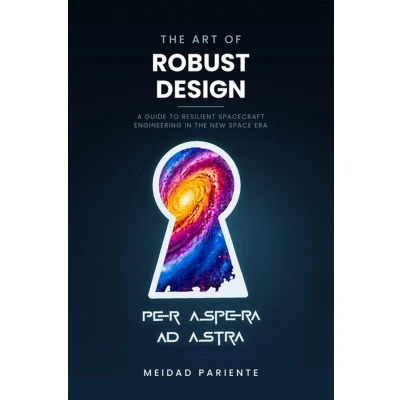
Most satellites don't die in orbit. They die on the bench, months before launch, and nobody catches it until orbit sends the invoice.Small satellites and CubeSats threw the doors to orbit wide open. This book is about what happens after you walk through them.Thirty-one years of building spacecraft, from five-ton geostationary birds down to 1U CubeSats, compressed into seventeen chapters you can read in an evening. Not a theory text. War stories, the failures underneath them, and the engineering habits that separate a mission that comes home with data from one that becomes a very expensive piece of debris.What is inside - Why the textbook project lifecycle never survives contact with a real schedule, and which stages you can actually truncate - How to read a mission requirement for what it means rather than what it says - Choosing COTS parts without wrecking the mission, and what a vendor's answer to one question tells you about their hardware - Command and telemetry schemes that hold up on an operator's worst day - Environmental testing: what the shaker, the vacuum chamber and the anechoic room are really looking for - The regulatory perimeter: ITU coordination, choosing your licensing flag, and the deorbit clock from the twenty-five-year rule to the FCC's five - How the insurance market quietly prices decisions you made three years earlier - The anatomy of a recovery, from a satellite that tumbled for reasons nobody could explain - Getting heritage engineers and CubeSat teams to speak each other's language - Where artificial intelligence belongs on a spacecraft, and where it does not Every chapter stands on its own, so you can read it front to back or open it at the problem in front of you. Twenty-six figures, a glossary, and further reading for every chapter.Who it is for The engineer who has to build the thing. New Space teams, CubeSat students, systems engineers crossing over from large spacecraft, and programme managers who need to know which corners are safe to cut. It is easy if you know what you are doing. Give yourself a 25-year head start.About the author Meidad "Mayday" Pariente has spent thirty-one years designing, building and flying spacecraft, from five-ton geostationary communications satellites to 1U CubeSats. He holds a B.Sc. in Physics from Tel Aviv University and an M.Sc. in Systems Engineering from the Technion, and is co-founder and Chief Space Officer of ORBITinsure.
 Prijshistorie
 * Prijshistorie bevat geen data van Amazon, Amazon Marketplace.
Prijzen voor het laatst bijgewerkt op:
 Gerelateerde resultaten
 Productspecificaties


