
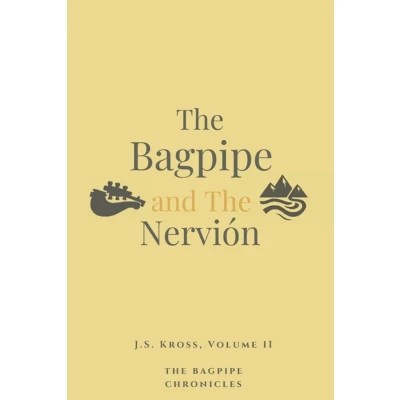
The Bagpipe and Nervión
Uitgelicht

|
11,02 |
Naar shop
|

|
11,02 |
Naar shop
|

|
12,50 |
Naar shop
|
| VERGELIJK ALLE AANBIEDERS (3) | ||
 Beschrijving
Bol
Mary Iriarte was looking for a blanket. Under her grandfather's bed, she found a shoebox instead. Inside: a bundle of letters in her grandmother's handwriting. A diary that begins in October 1972. A black-and-white photograph of two young people in a Bilbao bar, leaning towards each other with the inclination of people whose bodies have already decided what their minds haven't yet admitted. A bus ticket with a note on the back - the guesthouse was closed. It was perfect anyway. A bagpipe score with a handwritten title: Alborada for A. And a bunch of dried lavender that, after fifty years, still smells. Her grandfather comes home with the bread. He sees the open box on the table. There is a silence. Then: pour two coffees. What follows is the story he has never told in full - the story of Xabier Iriarte, a Galician shipyard worker in 1970s Bilbao, and Amaia Etxeberria, a French teacher who read Sartre in the original, argued politics with her brother, and had a sense of humour her family described as "inappropriate for her station." They met on a Thursday night in a bar on San Francisco Street when Xabier played the bagpipe without asking anyone's permission. She stopped on the other side of the street, shoulders slightly straighter than usual. She had two minutes to decide. She decided. What followed was three years navigating a Francoist father who had reasons (capital R), a Basque nationalist brother who needed convincing, and a city in the middle of changing everything. Letters written in Portuguese so her father couldn't read them. Replies in Galician, for the same reason. A closed guesthouse in Santander that was perfect anyway. And a bagpipe score - eight extra measures at the end of the Alborada, so that the end wouldn't come too soon. Told across two timeframes - the present of Mary reading in a Vigo December, and the past of her grandparents in the Bilbao of the 1970s - The Bagpipe and the Nervión is a love story, a family history, and a meditation on what people keep in shoeboxes because they can never quite bring themselves to throw it away. It is also the story of what we inherit: not just instruments and names, but the particular arithmetic of those who loved before us - improbably, stubbornly, and with the Galician conviction that love, like the sea, asks permission from no one. Xabier and Amaia. 1972-2008. Thirty-six years. They had time. Volume II of The Bagpipe Chronicles by J.S. Kross Can be read as a standalone novel or as the companion to The Bagpipe and the Scalpel.


 Beschrijving
(1)
Beschrijving
(1)
Mary Iriarte was looking for a blanket. Under her grandfather's bed, she found a shoebox instead. Inside: a bundle of letters in her grandmother's handwriting. A diary that begins in October 1972. A black-and-white photograph of two young people in a Bilbao bar, leaning towards each other with the inclination of people whose bodies have already decided what their minds haven't yet admitted. A bus ticket with a note on the back - the guesthouse was closed. It was perfect anyway. A bagpipe score with a handwritten title: Alborada for A. And a bunch of dried lavender that, after fifty years, still smells. Her grandfather comes home with the bread. He sees the open box on the table. There is a silence. Then: pour two coffees. What follows is the story he has never told in full - the story of Xabier Iriarte, a Galician shipyard worker in 1970s Bilbao, and Amaia Etxeberria, a French teacher who read Sartre in the original, argued politics with her brother, and had a sense of humour her family described as "inappropriate for her station." They met on a Thursday night in a bar on San Francisco Street when Xabier played the bagpipe without asking anyone's permission. She stopped on the other side of the street, shoulders slightly straighter than usual. She had two minutes to decide. She decided. What followed was three years navigating a Francoist father who had reasons (capital R), a Basque nationalist brother who needed convincing, and a city in the middle of changing everything. Letters written in Portuguese so her father couldn't read them. Replies in Galician, for the same reason. A closed guesthouse in Santander that was perfect anyway. And a bagpipe score - eight extra measures at the end of the Alborada, so that the end wouldn't come too soon. Told across two timeframes - the present of Mary reading in a Vigo December, and the past of her grandparents in the Bilbao of the 1970s - The Bagpipe and the Nervión is a love story, a family history, and a meditation on what people keep in shoeboxes because they can never quite bring themselves to throw it away. It is also the story of what we inherit: not just instruments and names, but the particular arithmetic of those who loved before us - improbably, stubbornly, and with the Galician conviction that love, like the sea, asks permission from no one. Xabier and Amaia. 1972-2008. Thirty-six years. They had time. Volume II of The Bagpipe Chronicles by J.S. Kross Can be read as a standalone novel or as the companion to The Bagpipe and the Scalpel.
 Productspecificaties
 Prijshistorie
* Prijshistorie bevat geen data van Amazon, Amazon Marketplace.
Prijzen voor het laatst bijgewerkt op:
 Gerelateerde resultaten


