


€ 53,99 Gratis verzending

Uitgelicht
|
|
53,99 |
Naar shop
|
| VERGELIJK ALLE AANBIEDERS (1) | ||
 Beschrijving
Vergelijk aanbieders (1)
€ 53,99 Gratis verzending
Winkels met andere maten
Beschrijving
(1)
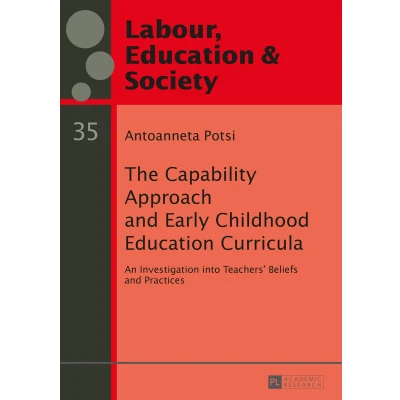
The book explores the potential of the Capability Approach as an alternative critical lens to early childhood education curricula. It investigates pre-primary teachers’ beliefs and practices and discusses issues that are likely to be confined and to provoke reflections to several national contexts. This book explores the Capability Approach (CA) as an alternative critical lens through which to regard early childhood education (ECE) curricula. The CA framework is a counter narrative to the narrow instrumentalism that reduces education to a mere process of academic skills acquisition for a future workplace. Primarily the book draws on the example of the Greek case. Criticizing the «bit role» that the front-line implementers play in the curriculum design and planning procedure it argues that efficient curriculum development can only occur when a zymosis between the pedagogues’ beliefs, practical experience, and theoretical knowledge is accomplished. Evidence shows that beliefs define the educators’ practices into the pedagogical context. The issues discussed are unlikely to be confined to this country alone and will have resonances on other contexts.
 Productspecificaties
| EAN |
|
|---|---|
| Maat |
|
 Prijshistorie
 Prijzen voor het laatst bijgewerkt op:
 Gerelateerde resultaten


