


€ 15,00 € 2,99 verzendkosten Totaal € 17,99

Gesponsorde links
|
|
15,00 |
Naar shop
|

|
16,04 |
Naar shop
|

|
16,04 |
Naar shop
|
| VERGELIJK ALLE AANBIEDERS (3) | ||
 Beschrijving
Vergelijk aanbieders (3)
Gesponsorde links · Sommige shops betalen ons een vergoeding
€ 15,00 € 2,99 verzendkosten Totaal € 17,99
€ 16,04 Gratis verzending
€ 16,04 Gratis verzending
Winkels met andere maten
Beschrijving
(1)
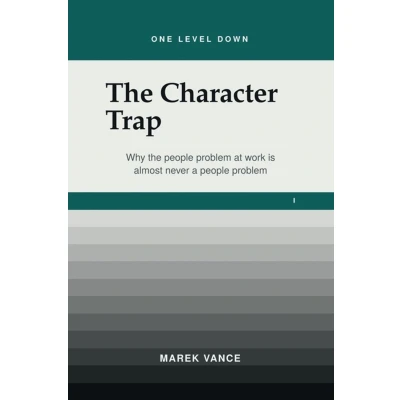
You already thought of someone.By the end of that sentence you had a name. You did not search for it. It arrived with a conclusion already attached: that is simply what they are like.It is the fastest and most satisfying explanation in working life. It is also wrong about five times out of six.The Character Trap builds the case for that explanation at full strength before taking it apart. What difficult people genuinely cost, measured in cognition, in unreported errors, in turnover, and in the coronary arteries of the men who worked for them. What the honest prevalence figures actually are. How to recognise the real thing without pretending to diagnose it, and how to survive working alongside one when you cannot leave and they will not be removed.Then it runs the arithmetic. Thirty percent of workers report abusive conduct at work. Roughly one in twenty are dealing with the phenomenon the explanation describes.Which leaves five-sixths of the problem unaccounted for, and a set of causes that live nowhere near anybody's character: the seat that produces the same reputation in whoever occupies it, the conduct that cascades down a hierarchy, the schedule that quietly suppresses the behaviour everyone says they value, the permission nobody remembers granting.Every study, figure and case in this book is taken from its original source. Chapter eleven explains why that matters more than it sounds - and why two of the most quoted experiments in the history of psychology do not say what you were taught they say.One Level Down is one argument in twelve numbered parts. Almost everything that goes wrong at work is diagnosed at the wrong level: we reach for character when the cause is incentive, for generation when the cause is status, for willpower when the cause is design. Each volume teaches one complete, usable lens - then ends on a real case its own lens cannot explain. That case is the next volume.This is where it starts.
 Prijshistorie
* Prijshistorie bevat geen data van Amazon, Amazon Marketplace.
Prijzen voor het laatst bijgewerkt op:
 Gerelateerde resultaten
 Productspecificaties


