


€ 16,31 € 2,99 verzendkosten Totaal € 19,30

Uitgelicht
|
|
16,31 |
Naar shop
|

|
16,47 |
Naar shop
|

|
16,47 |
Naar shop
|
| VERGELIJK ALLE AANBIEDERS (3) | ||
 Beschrijving
Vergelijk aanbieders (3)
€ 16,31 € 2,99 verzendkosten Totaal € 19,30
€ 16,47 Gratis verzending
€ 16,47 Gratis verzending
Winkels met andere maten
Beschrijving
(1)
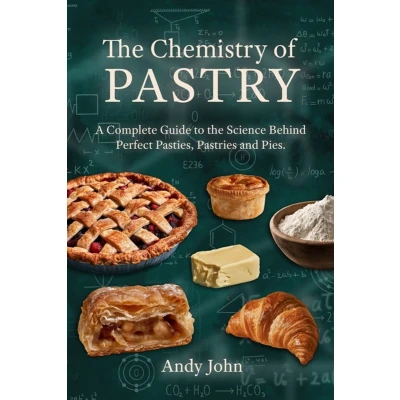
Why did your tart shell shrink? Why did the vol-au-vent collapse? And why does one croissant shatter into golden leaves while another sits dense and greasy? There is no such thing as bad luck in a pastry; there is only chemistry you did not see happening. The Chemistry of Pastry takes you inside the dough itself, explaining the science behind every fold, rest, chill and bake in warm, jargon-free prose. You will discover the gluten scaffold hiding in your flour, the butter crystals that decide flake or crumb, the steam that inflates seven hundred layers of laminate, and the browning reactions that transform pale dough into golden flavour. Covering both sweet and savoury pastry, from shortcrust and choux to hot water crust, suet, Danish and hand-stretched filo, this book teaches you not just what to do but why it works. And when things go wrong, a dedicated troubleshooting chapter shows you how to read your failures like a scientist: slumps, shrinkage, soggy bottoms and stale butter all confess their causes to anyone who knows the vocabulary. Inside you will find: - The complete molecular story of flour, fat, water, sugar, salt and egg, and how each shapes your pastry.- The physics of lamination, starch gels, emulsions and heat transfer, explained for the home kitchen.- A full diagnostic guide to the great pastry failures and how to prevent them.- Ten tested master recipes, from puff to pâte sablée, to use as baselines for your own experiments. >The laboratory was always a kitchen. The chemist was always a cook.
 Prijshistorie
* Prijshistorie bevat geen data van Amazon, Amazon Marketplace.
Prijzen voor het laatst bijgewerkt op:
 Gerelateerde resultaten
 Productspecificaties


