
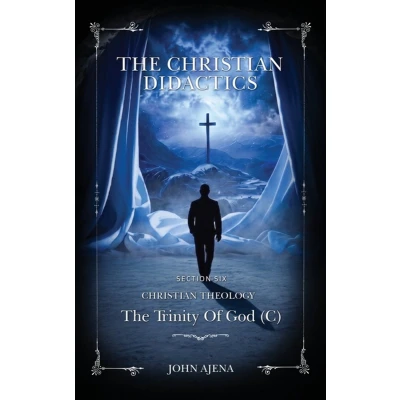
THE CHRISTIAN DIDACTICS: TRINITY OF GOD (C) SECTION SIX
Uitgelicht

|
40,99 |
Naar shop
|

|
45,80 |
Naar shop
|

|
45,80 |
Naar shop
|
| VERGELIJK ALLE AANBIEDERS (3) | ||
 Beschrijving
Bol
This Section of the Didactics continues the doctrine of Christ begun in Section Five, exploring the Hypostatic Submission of Christ, the Mediation of Christ, and the opera Dei ad intra and ad extra. On the eternal submission of Christ, three models are presented: the temporal (economic) model, the filial (ontological) model, and what we designate the hypostatic submission of Christ. The temporal model treats Christ's submission as a merely economic modality operative only within the divine economy, ceasing once salvation is consummated. The filial model extends submission into the divine essence, asserting an ontological subordination of the Son while still affirming consubstantiality. The hypostatic model rejects both temporality and ontological subordination, grounding Christ's submission in the one indivisible Hypostasis of the Son, whose two natures remain distinct yet inseparably united. Submission applies to the whole Christ in a differentiated manner: His human nature submits ontologically, as humanity is ordered toward submission to God; His divine nature submits functionally, since the divine nature admits no ontological subordination. Thus, a single act of submission is predicated of the one Hypostasis, reflecting the metaphysical intricacies of the Hypostatic Union. Regarding mediation, the deictic model holds that Christ mediates by establishing a deictic interface between God and humanity, marked by kenotic self¿abnegation that redirects humanity's gaze away from Himself to the Father. The psychological model argues that Christ mediates through the coexistence of divine and human psychologies-two intellects, wills, and affective centers-within one Person. The NeöReformed model, which we designate hypostatic mediation, maintains that Christ mediates neither merely deictically nor solely by psychological constitution; rather, His very Hypostasis is the mediatorial mechanism. He stands between God and Man as God and as Man, mediating by the ontological fact of His theanthropic being. Given the voluminosity of this work, the author cannot compress it into the single¿sentence summary required by the publisher. Readers are therefore invited to explore the manuscript for themselves.


 Beschrijving
(1)
Beschrijving
(1)
This Section of the Didactics continues the doctrine of Christ begun in Section Five, exploring the Hypostatic Submission of Christ, the Mediation of Christ, and the opera Dei ad intra and ad extra. On the eternal submission of Christ, three models are presented: the temporal (economic) model, the filial (ontological) model, and what we designate the hypostatic submission of Christ. The temporal model treats Christ's submission as a merely economic modality operative only within the divine economy, ceasing once salvation is consummated. The filial model extends submission into the divine essence, asserting an ontological subordination of the Son while still affirming consubstantiality. The hypostatic model rejects both temporality and ontological subordination, grounding Christ's submission in the one indivisible Hypostasis of the Son, whose two natures remain distinct yet inseparably united. Submission applies to the whole Christ in a differentiated manner: His human nature submits ontologically, as humanity is ordered toward submission to God; His divine nature submits functionally, since the divine nature admits no ontological subordination. Thus, a single act of submission is predicated of the one Hypostasis, reflecting the metaphysical intricacies of the Hypostatic Union. Regarding mediation, the deictic model holds that Christ mediates by establishing a deictic interface between God and humanity, marked by kenotic self¿abnegation that redirects humanity's gaze away from Himself to the Father. The psychological model argues that Christ mediates through the coexistence of divine and human psychologies-two intellects, wills, and affective centers-within one Person. The NeöReformed model, which we designate hypostatic mediation, maintains that Christ mediates neither merely deictically nor solely by psychological constitution; rather, His very Hypostasis is the mediatorial mechanism. He stands between God and Man as God and as Man, mediating by the ontological fact of His theanthropic being. Given the voluminosity of this work, the author cannot compress it into the single¿sentence summary required by the publisher. Readers are therefore invited to explore the manuscript for themselves.
 Productspecificaties
 Prijshistorie
* Prijshistorie bevat geen data van Amazon, Amazon Marketplace.
Prijzen voor het laatst bijgewerkt op:
 Gerelateerde resultaten


