
The Claims of Common Sense
Uitgelicht

|
115,00 |
Naar shop
|
| VERGELIJK ALLE AANBIEDERS (1) | ||
 Beschrijving
Bol
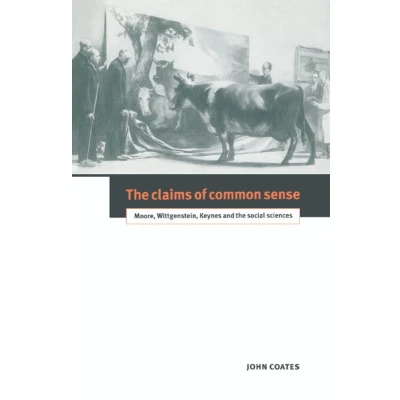
John Coates examines the thought of Moore, Ramsey, Wittgenstein and Keynes in this study. He investigates the importance for the social sciences of the ideas developed by these Cambridge philosophers between the two World Wars, and offers evidence that there was far closer collaboration between them than has been supposed. The Claims of Common Sense investigates the importance of ideas developed by Cambridge philosophers between the World Wars for the social sciences concerning common sense, vague concepts and ordinary language. John Coates examines the thought of Moore, Ramsey, Wittgenstein and Keynes, and traces their common drift away from early beliefs about the need for precise concepts and a canonical notation in analysis. He argues that Keynes borrowed from Wittgenstein and Ramsey their reappraisal of vague concepts, and developed the novel argument that when analysing something as complex as social reality, theory might be simplified by using concepts which lack sharp boundaries. Coates then contrasts this conclusion with the view shared by two contemporary philosophical paradigms - formal semantics and Continental post-structuralism - that the vagueness of ordinary language inevitably leads to interpretive indeterminacy. Developing a link between Cambridge philosophy and work on complexity, vague predicates and fuzzy logic, he argues that Wittgenstein's and Keynes's ideas on the economy of ordinary language present a mediating route for the social sciences between these philosophical paradigms.


Vergelijk aanbieders (1)

 Beschrijving
(1)
Beschrijving
(1)
John Coates examines the thought of Moore, Ramsey, Wittgenstein and Keynes in this study. He investigates the importance for the social sciences of the ideas developed by these Cambridge philosophers between the two World Wars, and offers evidence that there was far closer collaboration between them than has been supposed. The Claims of Common Sense investigates the importance of ideas developed by Cambridge philosophers between the World Wars for the social sciences concerning common sense, vague concepts and ordinary language. John Coates examines the thought of Moore, Ramsey, Wittgenstein and Keynes, and traces their common drift away from early beliefs about the need for precise concepts and a canonical notation in analysis. He argues that Keynes borrowed from Wittgenstein and Ramsey their reappraisal of vague concepts, and developed the novel argument that when analysing something as complex as social reality, theory might be simplified by using concepts which lack sharp boundaries. Coates then contrasts this conclusion with the view shared by two contemporary philosophical paradigms - formal semantics and Continental post-structuralism - that the vagueness of ordinary language inevitably leads to interpretive indeterminacy. Developing a link between Cambridge philosophy and work on complexity, vague predicates and fuzzy logic, he argues that Wittgenstein's and Keynes's ideas on the economy of ordinary language present a mediating route for the social sciences between these philosophical paradigms.
 Productspecificaties
| EAN |
|
|---|---|
| Maat |
|
 Prijshistorie
Prijzen voor het laatst bijgewerkt op:
 Gerelateerde resultaten


