

€ 15,65 Gratis verzending

Uitgelicht
|
|
15,65 |
Naar shop
|

|
15,65 |
Naar shop
|

|
17,00 |
Naar shop
|
| VERGELIJK ALLE AANBIEDERS (3) | ||
 Beschrijving
Vergelijk aanbieders (3)
€ 15,65 Gratis verzending
€ 15,65 Gratis verzending
€ 17,00 € 2,99 verzendkosten Totaal € 19,99
Winkels met andere maten
Beschrijving
(1)
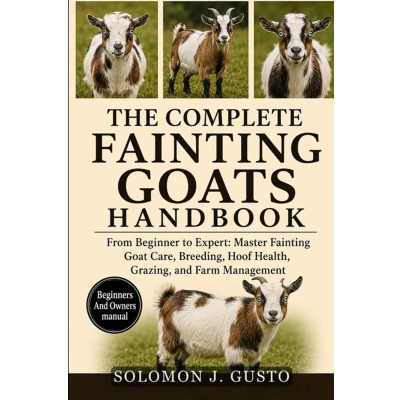
Introduction to Fainting Goats What Are Fainting Goats? Fainting goats, also known as Myotonic goats, Tennessee Fainting Goats, or Wooden-Leg goats, are a unique breed of domestic goat best known for their temporary muscle stiffness when startled. Despite their name, these goats do not actually lose consciousness. Instead, they experience a harmless genetic condition called myotonia congenita, which causes their muscles to tense briefly after sudden excitement or fear. During these episodes, the goats may remain standing stiffly or fall onto their sides before quickly recovering and continuing their normal activities. Originally developed in the United States, fainting goats are valued for much more than their unusual behavior. They are intelligent, friendly, easy to manage, and highly adaptable to different farming systems. Many owners keep them as companion animals, while others raise them for meat production, breeding programs, exhibition, or conservation of rare livestock genetics. Compared with many other goat breeds, fainting goats are generally less inclined to climb high fences or escape enclosures because their muscular build and myotonia make them less agile. This characteristic often makes them easier for beginners to manage, although they still require secure fencing and proper care. Today, fainting goats are found worldwide and are admired by farmers, hobbyists, educators, and families for their calm personalities and distinctive appearance. History and Origin The history of the fainting goat dates back to the late 1800s in Marshall County, Tennessee, United States. Historical records suggest that a farm worker named John Tinsley arrived in Tennessee around 1880 with a small group of unusual goats. These animals displayed temporary muscle stiffness whenever they became excited, surprising local farmers who had never seen such behavior. Recognizing their usefulness, local farmers selectively bred these goats for desirable qualities such as: - Heavy muscling- Calm temperament- Strong maternal instincts- Easy handling- Good meat productionOver the following decades, the breed spread throughout the southern United States, especially in Tennessee, Texas, and neighboring states. Their muscular build made them excellent meat goats, while their gentle nature attracted small-scale farmers. Interest in the breed declined during the mid-20th century as commercial meat breeds became more popular. Fortunately, dedicated breeders worked to preserve the fainting goat's unique genetics. Breed associations were established to maintain breeding standards, document pedigrees, and promote responsible ownership. Today, fainting goats are recognized as an important heritage livestock breed. They continue to gain popularity among homesteaders, educational farms, pet owners, and livestock exhibitors around the world.
 Prijshistorie
 * Prijshistorie bevat geen data van Amazon, Amazon Marketplace.
Prijzen voor het laatst bijgewerkt op:
 Gerelateerde resultaten
 Productspecificaties


