


€ 16,00 € 2,99 verzendkosten Totaal € 18,99

Gesponsorde links
|
|
16,00 |
Naar shop
|

|
19,10 |
Naar shop
|

|
19,10 |
Naar shop
|
| VERGELIJK ALLE AANBIEDERS (3) | ||
 Beschrijving
Vergelijk aanbieders (3)
Gesponsorde links · Sommige shops betalen ons een vergoeding
€ 16,00 € 2,99 verzendkosten Totaal € 18,99
€ 19,10 Gratis verzending
€ 19,10 Gratis verzending
Winkels met andere maten
Beschrijving
(1)
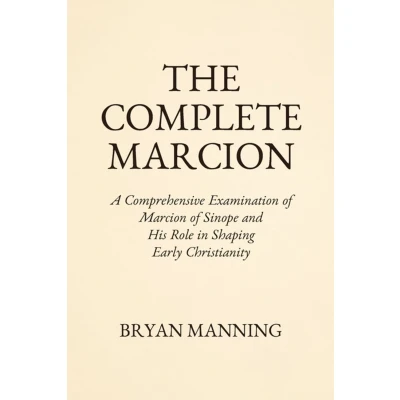
Around 144 AD, Marcion of Sinope was expelled from the Roman church. His writings were lost, his communities condemned as heretical, and his name became a byword for everything the emerging Catholic Church opposed. Yet Marcionite churches survived for centuries, from Rome to Syria and Persia. And scholars remain divided: did Marcion corrupt the gospel, or did he preserve an earlier version than the one the church eventually canonized? The Complete Marcion gathers the evidence in one readable volume. It draws on all seven major ancient witnesses, every one of them hostile: Justin, Irenaeus, Tertullian, Hippolytus, Epiphanius, Adamantius and Eusebius. It also draws on the leading modern scholarship of Lieu, Klinghardt, Vinzent, BeDuhn, Roth and Harnack. From these it reconstructs his life, his two-God theology, his ascetic communities, and the scripture at the heart of the controversy: the first Christian canon. That canon had two halves, and this book reconstructs both: a verse-by-verse reconstruction of Marcion's Gospel, and a complete, readable reconstruction of his Apostolikon, the ten letters of Paul as Marcion's churches read them, with every omission and altered reading the ancient witnesses report marked in the text. A third reconstruction gathers his lost Antitheses from every surviving source. Together they put the Bible of the man the church called its first great heretic into your hands, as closely as the evidence allows. Around that core, the book reads every hostile source critically and lays out both sides of the priority debate: did Marcion's gospel come before Luke, or after? A closing chapter follows Marcion's central question, what Christianity has to do with the God, the scriptures and the people of Israel, out of the second century and into the modern world, where it took on a resonance he never foresaw. Was Marcion a dangerous heretic, or the man who forced Christianity to assemble its New Testament? Read the sources. Examine the reconstruction. Make up your own mind. About the Author Bryan Manning has spent over two decades studying the intersection of religion, history, and power. A lifelong independent scholar and explorer of ideas, he is drawn to the questions that institutional history tends to leave unanswered: the roads not taken, the voices that were silenced, the texts that were destroyed. His particular fascination in recent years has been the world of early Christianity before the canon closed: a period of genuine diversity, competing theologies, and open questions that the orthodox tradition worked hard to suppress. Marcion of Sinope has been at the center of that fascination, a figure too important to ignore and too inconvenient to have been treated fairly. Revised and Expanded June 2026
 Prijshistorie
* Prijshistorie bevat geen data van Amazon, Amazon Marketplace.
Prijzen voor het laatst bijgewerkt op:
 Gerelateerde resultaten
 Productspecificaties


