


€ 104,40 Gratis verzending

Uitgelicht
|
|
104,40 |
Naar shop
|
| VERGELIJK ALLE AANBIEDERS (1) | ||
 Beschrijving
Vergelijk aanbieders (1)
€ 104,40 Gratis verzending
Winkels met andere maten
Beschrijving
(1)
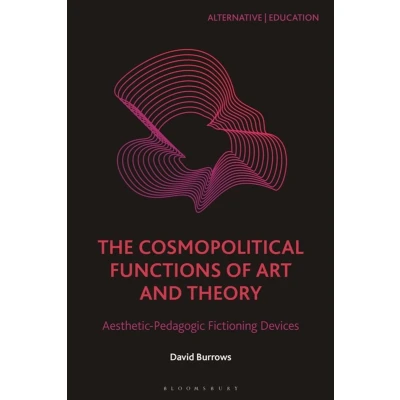
Addresses the pedagogic aspects of contemporary art and philosophical aesthetics and writing concerned with different, divergent or deviant perspectives, and with fictioning that counters modern and globalizing narratives. The Cosmopolitical Functions of Art and Theory proposes that contemporary artworks are devices that generate encounters with cosmopolitical problems and relations. To this end, the volume explores the ways in which artworks combine aesthetics (experimentation with presentation), pedagogy (constructivist modes of study) and fictioning (actualization of worlds or communities) to generate social, ontological and cosmological perspectives that offer alternatives to the legacies of modernism, globalisation and colonialism and the narratives of reactionary and technological futurisms.Three sections–Worlds, Devices, Communities–structure the book’s discussion of art and cosmopolitical themes that include: cosmopolitanism and cosmic orders, environmental politics and nonhuman agencies, the ontological turn in anthropology, the cosmologies of quantum mechanics, partiality and studies of blackness, and concepts of pluriversality. This study draws on the practices of a diverse group of artists including, John Akomfrah, Black Quantum Futurism, Filipa César, Libby Heaney, Lawrence Lek, Pauline Oliveros, Orphan Drift, Katrina Plamer, Lea Porsager, Patricia Reed, Rigo 23 and Larissa Sansour, which are placed in dialogue with the concepts of philosophers, geographers, scientists and anthropologists including Karen Barad, Gilles Châtelet, Stuart Hall, Stefano Harney and Fred Moten, Yuk Hui, Elizabeth Povinelli, Milton Santos, Edward Soja, Eduardo Viverios de Castro and Sylvia Wynter.
 Productspecificaties
| EAN |
|
|---|---|
| Maat |
|
 Prijshistorie
 Prijzen voor het laatst bijgewerkt op:
 Gerelateerde resultaten


