


€ 33,99 Gratis verzending

Uitgelicht
|
|
33,99 |
Naar shop
|

|
36,90 |
Naar shop
|

|
36,90 |
Naar shop
|
| VERGELIJK ALLE AANBIEDERS (3) | ||
 Beschrijving
Vergelijk aanbieders (3)
€ 33,99 Gratis verzending
€ 36,90 Gratis verzending
€ 36,90 Gratis verzending
Winkels met andere maten
Beschrijving
(1)
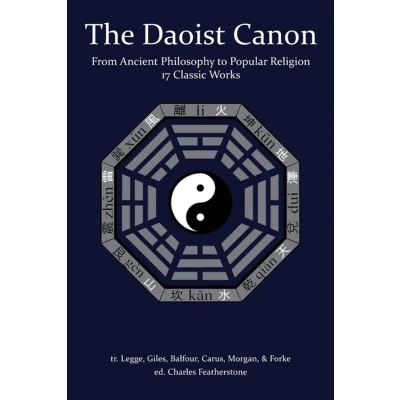
Any study of Dàoism is a paradox. The first line of the Dàodé J¿ng declares: "The way that can be spoken of is not the constant way." This inherent contradiction-attempting to define the indefinable-lies at the heart of the tradition. Yet it is precisely this tension that makes Dàoism so rich and enduring. Born in the tumultuous Warring States Period, Dàoism emerged as the mystical counterpart to Confucianism, looking beyond social convention to the unnameable principle of the cosmos. We begin with the three philosophical pillars: the Dàodé J¿ng ot Tao te Ching (presented in two translations by Legge and Giles), the allegorical Zhüngz¿ or Chuang Tsu, and the practical Lièz¿ or Lieh Tzu (including the radical "Yáng Zh¿'s Garden of Pleasure"). From these roots, the canon expands to include works of Huáng-L¿o thought synthesizing cosmology with statecraft in the S¿nz¿ B¿ngf¿, (Art Of War), Yì J¿ng (I Ching), Sù Sh¿, Hóng Liè Zhuàn, Y¿nfú J¿ng, and the Dàtóng J¿ng. The medieval period gives us revealed scriptures as Dàoism evolves into a comprehensive religion through temple inscriptions, talismanic texts like the Chìwén Dòng, liturgical works such as the Yùsh¿ J¿ng, and L¿oz¿ Miào B¿i. The Sòng dynasty saw a turn toward internal alchemy and meditative practice in the T¿ixí J¿ng, X¿nyìn J¿ng, and Q¿ngjìng J¿ng, and towards moral guidance through morality books in the Tàishàng G¿nyìng Pi¿n, Y¿nzhì Wén, and Dàtóng J¿ng. Aside from the texts themselves, this volume includes two essays by James Legge explore Dàoism's origins and core beliefs, a glossary of terms, and extensive introductions to Dàoism, the works, and the translators (Giles, Legge, Balfour, Morgan, and Forke), creating an indispensable resource for anyone seeking to understand the depth and wisdom of the Dào. Includes ¿¿¿¿¿¿¿¿¿¿¿¿¿¿¿¿¿¿¿¿¿¿¿¿¿¿¿¿¿¿¿¿¿¿¿¿¿¿¿¿¿¿¿¿¿¿¿¿¿¿¿¿¿¿¿¿¿¿¿¿¿¿¿¿¿¿¿
 Prijshistorie
 * Prijshistorie bevat geen data van Amazon, Amazon Marketplace.
Prijzen voor het laatst bijgewerkt op:
 Gerelateerde resultaten
 Productspecificaties


