
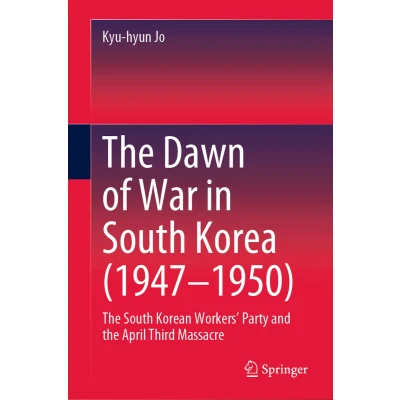
The Dawn of War in South Korea (19471950)
Uitgelicht

|
109,00 |
Naar shop
|
| VERGELIJK ALLE AANBIEDERS (1) | ||
 Beschrijving
Bol
This book offers an analytical account of the April Third Massacre in Korea, a bloody confrontation between supporters of the Syngman Rhee Administration and those suspected (largely incorrectly) of being Communists, or members of the South Korean Workers' Party—the second largest Communist Party after Korea's liberation from Japanese colonial rule. As a result, some 80,000 villagers, fishermen, and policemen were killed. The book, drawing from a wide array of primary sources, ranging from South Korean governmental records, memoranda, memoirs, and recently unclassified documents, examines the role of the South Korean Workers' Party in the April Third Massacre on Jeju and how it shaped the origins of the Korean War. The author maps these origins of the Korean War from the outbreak of the April Third Massacre and through the ensuing chain of violence which included the Yo-su and Sun-ch'on Massacres of October 1948, engulfing the peninsula until 1949. Of interest to all scholars studyingmodern Korea, it is particularly relevant to historians focused on the Korean War, as well as political scientists and international relations experts interested in East Asian conflicts. This book offers an analytical account of the April Third Massacre in Korea, a bloody confrontation between supporters of the Syngman Rhee Administration and those suspected (largely incorrectly) of being Communists, or members of the South Korean Workers' Party—the second largest Communist Party after Korea's liberation from Japanese colonial rule. As a result, some 80,000 villagers, fishermen, and policemen were killed. The book, drawing from a wide array of primary sources, ranging from South Korean governmental records, memoranda, memoirs, and recently unclassified documents, examines the role of the South Korean Workers' Party in the April Third Massacre on Jeju and how it shaped the origins of the Korean War. The author maps these origins of the Korean War from the outbreak of the April Third Massacre and through the ensuing chain of violence which included the Yo-su and Sun-ch'on Massacres of October 1948, engulfing the peninsula until 1949. Of interest to all scholars studyingmodern Korea, it is particularly relevant to historians focused on the Korean War, as well as political scientists and international relations experts interested in East Asian conflicts.


Vergelijk aanbieders (1)

 Beschrijving
(1)
Beschrijving
(1)
This book offers an analytical account of the April Third Massacre in Korea, a bloody confrontation between supporters of the Syngman Rhee Administration and those suspected (largely incorrectly) of being Communists, or members of the South Korean Workers' Party—the second largest Communist Party after Korea's liberation from Japanese colonial rule. As a result, some 80,000 villagers, fishermen, and policemen were killed. The book, drawing from a wide array of primary sources, ranging from South Korean governmental records, memoranda, memoirs, and recently unclassified documents, examines the role of the South Korean Workers' Party in the April Third Massacre on Jeju and how it shaped the origins of the Korean War. The author maps these origins of the Korean War from the outbreak of the April Third Massacre and through the ensuing chain of violence which included the Yo-su and Sun-ch'on Massacres of October 1948, engulfing the peninsula until 1949. Of interest to all scholars studyingmodern Korea, it is particularly relevant to historians focused on the Korean War, as well as political scientists and international relations experts interested in East Asian conflicts. This book offers an analytical account of the April Third Massacre in Korea, a bloody confrontation between supporters of the Syngman Rhee Administration and those suspected (largely incorrectly) of being Communists, or members of the South Korean Workers' Party—the second largest Communist Party after Korea's liberation from Japanese colonial rule. As a result, some 80,000 villagers, fishermen, and policemen were killed. The book, drawing from a wide array of primary sources, ranging from South Korean governmental records, memoranda, memoirs, and recently unclassified documents, examines the role of the South Korean Workers' Party in the April Third Massacre on Jeju and how it shaped the origins of the Korean War. The author maps these origins of the Korean War from the outbreak of the April Third Massacre and through the ensuing chain of violence which included the Yo-su and Sun-ch'on Massacres of October 1948, engulfing the peninsula until 1949. Of interest to all scholars studyingmodern Korea, it is particularly relevant to historians focused on the Korean War, as well as political scientists and international relations experts interested in East Asian conflicts.
 Productspecificaties
| EAN |
|
|---|---|
| Maat |
|
 Prijshistorie
Prijzen voor het laatst bijgewerkt op:
 Gerelateerde resultaten


