


€ 14,00 € 2,99 verzendkosten Totaal € 16,99

Gesponsorde links
|
|
14,00 |
Naar shop
|

|
14,73 |
Naar shop
|

|
14,73 |
Naar shop
|
| VERGELIJK ALLE AANBIEDERS (3) | ||
 Beschrijving
Vergelijk aanbieders (3)
Gesponsorde links · Sommige shops betalen ons een vergoeding
€ 14,00 € 2,99 verzendkosten Totaal € 16,99
€ 14,73 Gratis verzending
€ 14,73 Gratis verzending
Winkels met andere maten
Beschrijving
(1)
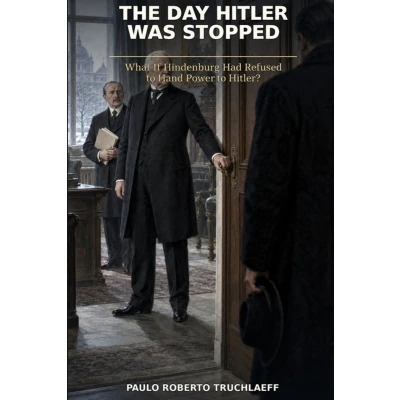
On January 30, 1933, President Paul von Hindenburg made the decision that opened the doors of the German state to Adolf Hitler. But what if that door had remained closed? In this alternate history, Hindenburg refuses to appoint Hitler as chancellor. The Nazi Party begins to fracture, the German state confronts the SA, and Hitler loses the opportunity to transform a mass political movement into a totalitarian regime. Yet Germany does not suddenly become peaceful or democratic. Unemployment, political violence, antisemitism, resentment against the Treaty of Versailles, and fear of communism remain. A conservative authoritarian government attempts to restore stability while Europe searches for a new balance of power. From Berlin and Moscow to London, Washington, Tokyo, Brazil, and the wider world, this book explores the consequences of a twentieth century without Hitler in power: no Holocaust in its historical form, no Second World War as we know it, a different Soviet Union, surviving colonial empires, another path for science and nuclear technology, and a far right that is never discredited by the catastrophe of Nazism. The result is not a perfect world, but a profoundly different one-and a reminder that history often depends on decisions whose full consequences no one can foresee.
 Prijshistorie
* Prijshistorie bevat geen data van Amazon, Amazon Marketplace.
Prijzen voor het laatst bijgewerkt op:
 Gerelateerde resultaten
 Productspecificaties


