


€ 16,00 € 2,99 verzendkosten Totaal € 18,99

Uitgelicht
|
|
16,00 |
Naar shop
|

|
17,21 |
Naar shop
|
| VERGELIJK ALLE AANBIEDERS (2) | ||
 Beschrijving
Vergelijk aanbieders (2)
€ 16,00 € 2,99 verzendkosten Totaal € 18,99
€ 17,21 Gratis verzending
Winkels met andere maten
Beschrijving
(1)
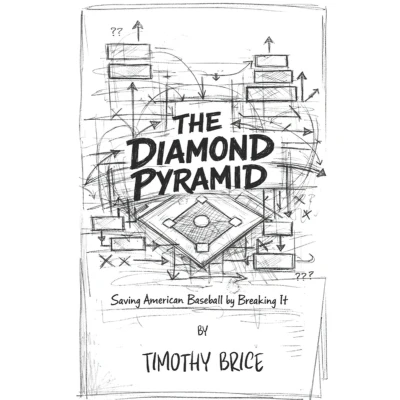
For more than a century, American baseball has operated under a legal and economic exception unlike any other major industry: a special antitrust exemption granted by Congress that shields it from the rules of open competition. Over time, that protection has reshaped the sport-not just on the field, but in its labor markets, ownership incentives, and relationship to the communities it claims to serve.The Diamond Pyramid argues that to save America's pastime, we must break the system that governs it.Drawing on history, economics, and real-world case studies, the book makes the case for a radical but practical restructuring of professional baseball into an open, five-tier system built on promotion and relegation. In place of a closed monopoly that rewards inherited status and tolerates failure, the Diamond Pyramid proposes a merit-based structure that restores accountability, rewards performance, and aligns the interests of players, owners, and fans.But this is not just a baseball book.Baseball serves as a proof of concept for a larger American idea: that systems designed around earned success and shared risk produce fairer, more humane outcomes than systems built to protect incumbents through insulation and special privilege. By examining how baseball's legal and economic design shapes behavior at every level-from billion-dollar franchises to minor league players fighting for a career-the book reveals how invisible rules quietly determine who advances, who is protected, and who pays the cost.Written for general readers but grounded in policy and structure, The Diamond Pyramid avoids ideological labels in favor of clear incentives and hard questions. It is an argument about labor, fairness, and accountability-and about what becomes possible when we choose open systems over closed ones.
 Prijshistorie
 * Prijshistorie bevat geen data van Amazon.
Prijzen voor het laatst bijgewerkt op:
 Gerelateerde resultaten
 Productspecificaties


