


€ 45,99 Gratis verzending

Uitgelicht
|
|
45,99 |
Naar shop
|

|
58,46 |
Naar shop
|
| VERGELIJK ALLE AANBIEDERS (2) | ||
 Beschrijving
Vergelijk aanbieders (2)
€ 45,99 Gratis verzending
gebruikt € 58,46 Gratis verzending
Winkels met andere maten
Beschrijving
(2)
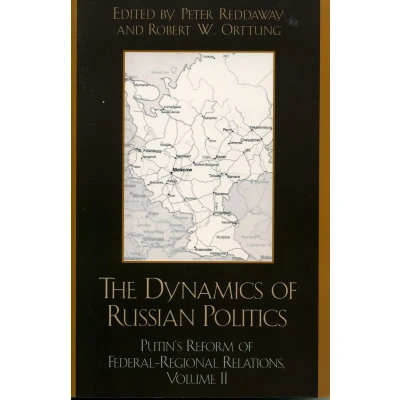
In May 2000, President Vladimir Putin created seven federal okrugs to impose greater federal control over Russia's regions. Volume II of The Dynamics of Russian Politics examines the impact of these reforms on Russia's main political institutions; the increasingly assertive business community; and the defense, police, and security ministries. Who rules Russia? This question is generated by President Vladimir Putin's most ambitious reform program to date—his attempt since 2000 to reshape the Russian federation, centralize much of the power lost by the Kremlin to the eighty-nine regional governors during the 1990s, and strengthen his weak grip on Russia's institutions and political elite. In The Dynamics of Russian Politics Russian and Western authors from the fields of political science, economics, ethnology, law, and journalism examine the reform's impact on key areas of Russian life, including big business, law enforcement, corruption, political party development, health care, local government, small business, and ethnic relations. Volume I presents the historical context and an overview of the reforms, then tracks how Putin's plans were implemented and resisted across each of the seven new federal okrugs, or megaregions, into which he divided Russia. In particular, the authors analyze the goals and contrasting political styles of his seven commissars and how their often-concealed struggles with the more independent and determined governors played out. Volume II examines the impact of these reforms on Russia's main political institutions; the increasingly assertive business community; and the defense, police, and security ministries. It also analyzes how the reforms have affected such key policy areas as local government, health care, political party development, the battle against corruption, small business, ethnic relations, and the ongoing Chechen war. Together, the two volumes simultaneously reveal that Putin's successes have been much more limited and ambiguous than is widely believed in the West while offering detailed and nuanced answers to the difficult but crucial question: Who rules Russia?
BolThis work focuses on problems of economic development, modernization, effective control, and possible democratic evolution of Russia. It is intended to bring the study of Russian politics into the mainstream of political science, and it assumes no previous knowledge on the part of the reader. Fundamental questions about the nature of political, economic, and social development are addressed. It examines and explains the incapacity of the Soviet system to deal with problems of modernization, including establishing and maintaining a political order, economic growth, and legitimacy. The work emphasizes dynamic relationships and changes.
 Productspecificaties
| EAN |
|
|---|---|
| Maat |
|
 Prijshistorie
 Prijzen voor het laatst bijgewerkt op:
 Gerelateerde resultaten


