

€ 24,87 Gratis verzending

Gesponsorde links
|
|
24,87 |
Naar shop
|

|
26,99 |
Naar shop
|
| VERGELIJK ALLE AANBIEDERS (2) | ||
 Beschrijving
Vergelijk aanbieders (2)
Gesponsorde links · Sommige shops betalen ons een vergoeding
€ 24,87 Gratis verzending
€ 26,99 Gratis verzending
Winkels met andere maten
Beschrijving
(1)
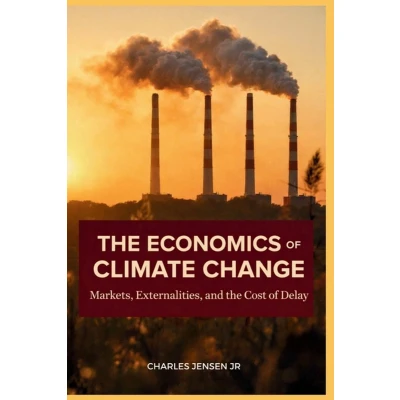
Climate change is often framed as an environmental problem. In reality, it is an economic system problem shaped by incentives, prices, institutions, and risk.The Economics of Climate Change: Markets, Externalities, and the Cost of Delay examines climate change through the tools of modern economic analysis-externalities, public goods, carbon pricing, technological change, and welfare trade-offs. Drawing on empirical research, historical case studies, and policy models used by governments and international organizations, this book explains why emissions persist, why delay increases costs, and how carefully designed markets and institutions can reduce risk while preserving growth.Readers will explore how industrialization raised global prosperity while increasing atmospheric CO₂ from roughly 280 ppm to over 420 ppm; how extreme weather losses now exceed hundreds of billions of dollars annually; why the social cost of carbon is central to policy design; and how carbon taxes, cap-and-trade systems, innovation policy, and adaptation strategies interact across global economies. The analysis connects energy markets, financial risk, inequality, and technological transition, showing how climate change affects prices, wages, investment decisions, and long-term development.Written in a rigorous but accessible style, the book integrates insights from environmental economics, macroeconomics, public finance, and political economy. Each chapter presents frameworks used in real policy debates, explains the assumptions behind climate models, and evaluates trade-offs between mitigation, adaptation, and growth. Special attention is given to the economics of delay: why postponing action raises total costs, increases volatility, and shifts burdens across generations.For students, policymakers, investors, and readers seeking a deeper understanding of climate policy, this book offers a structured guide to the incentives that drive emissions and the tools that can reshape them. Climate change is not only a scientific challenge; it is a question of institutional design and economic coordination.Understanding the system is the first step toward changing it.
 Prijshistorie
 * Prijshistorie bevat geen data van Amazon.
Prijzen voor het laatst bijgewerkt op:
 Gerelateerde resultaten
 Productspecificaties


