


gebruikt € 18,00 Gratis verzending

Uitgelicht
|
|
18,00 |
Naar shop
|

|
54,99 |
Naar shop
|
| VERGELIJK ALLE AANBIEDERS (2) | ||
 Beschrijving
Vergelijk aanbieders (2)
gebruikt € 18,00 Gratis verzending
€ 54,99 Gratis verzending
Winkels met andere maten
Beschrijving
(2)
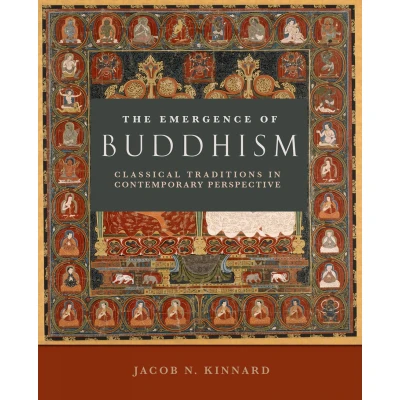
Deals with the Brahmanical cosmology from which Buddhism emerged, the stories and myths surrounding the Buddha's birth, his path to enlightenment, and the eventual spread of his teachings. This work helps readers understand concepts such as the natural law of cause and effect (karma), the birth/life/death/rebirth cycle (samsara), and more. In the 6th century B.C.E., a young prince named Siddhartha Gotama set out on an ascetic quest to alleviate human suffering. In the middle ground between opulence and self-denial, he discovered a path to enlightenment and self awareness—and he dedicated his life to sharing that discovery. The man called Buddha, the Awakened One, traveled as an itinerant monk, imparting principles of enlightenment throughout India and what is now southern Nepal. He was not worshipped as a god, but became teacher and model to ascetics, royalty, and townsfolk alike. In the 2,500 years that followed, through the spread of Buddha's teachings and the monastic communities that upheld them, the world's oldest missionary religion has grown so that it now boasts over 350 million followers worldwide. The story of Buddhism unfolds through a series of narrative chapters, dealing with the Brahmanical cosmology from which Buddhism emerged, the stories and myths surrounding Buddha's birth, Buddha's path to enlightenment, and the eventual spread of his teachings throughout India and the world. Kinnard's clear telling of the tale helps students understand such complex concepts as the natural law of cause and effect (karma), the birth/life/death/rebirth cycle (samsara), the ever-changing state of suffering (dukkha), and salvation, the absence of all states (nirvana). Primary documents, illustrations, glossary and biographical sketches illuminate the extraordinary life and legacy of the man called Buddha.
Bol PartnerThis brief survey text tells the story of Buddhism as it unfolds through the narrative of the Brahmanical cosmology from which Buddhism emerged, the stories and myths surrounding Buddha's birth, Buddha's path to enlightenment, and the eventual spread of his teachings throughout India and the world. Jacob N. Kinnard's clear telling of the tale helps students understand such complex concepts as the natural law of cause and effect (karma), the birth/life/death/rebirth cycle (samsara), the ever-changing state of suffering (dukkha), and salvation, the absence of all states (nirvana). Primary documents, illustrations, glossary and biographical sketches illuminate the extraordinary life and legacy of the man called Buddha. The text's chapters integrate key pedagogy, including introductions, study questions, textboxes, photos, maps, suggested readings, and a glossary and timeline.
 Productspecificaties
| EAN |
|
|---|---|
| Maat |
|
 Prijshistorie
 Prijzen voor het laatst bijgewerkt op:
 Gerelateerde resultaten


